
Self-Driving Cars: What’s Happening Now?
Gillian Hiscox
While it seems that most people are unwilling to give up the driver’s seat, many car companies plan on releasing self-driving cars within the next few years.
Are we ready to accept self-driving cars onto our roads?
The First or the Best: Which Car Companies are Currently Testing Self-Driving Cars Right Now?
It’s not hard to surmise that the first company to reach the market can expect a huge capital gain.
The promise of fully autonomous technology within the next few years has generated billions of dollars in investments. There are 46 different companies testing self-driving technology, some even aiming for release of their cars as early as 2020. While some car companies are testing their own cars and developing software, artificial intelligence and rideshare companies are also big players.
Waymo, owned by the same company as Google, has teamed up with Honda and Chrysler as well as creating their own self-driving cars. Uber is partners with Volvo and Ford, while other tech companies are forming partnerships as well.
-
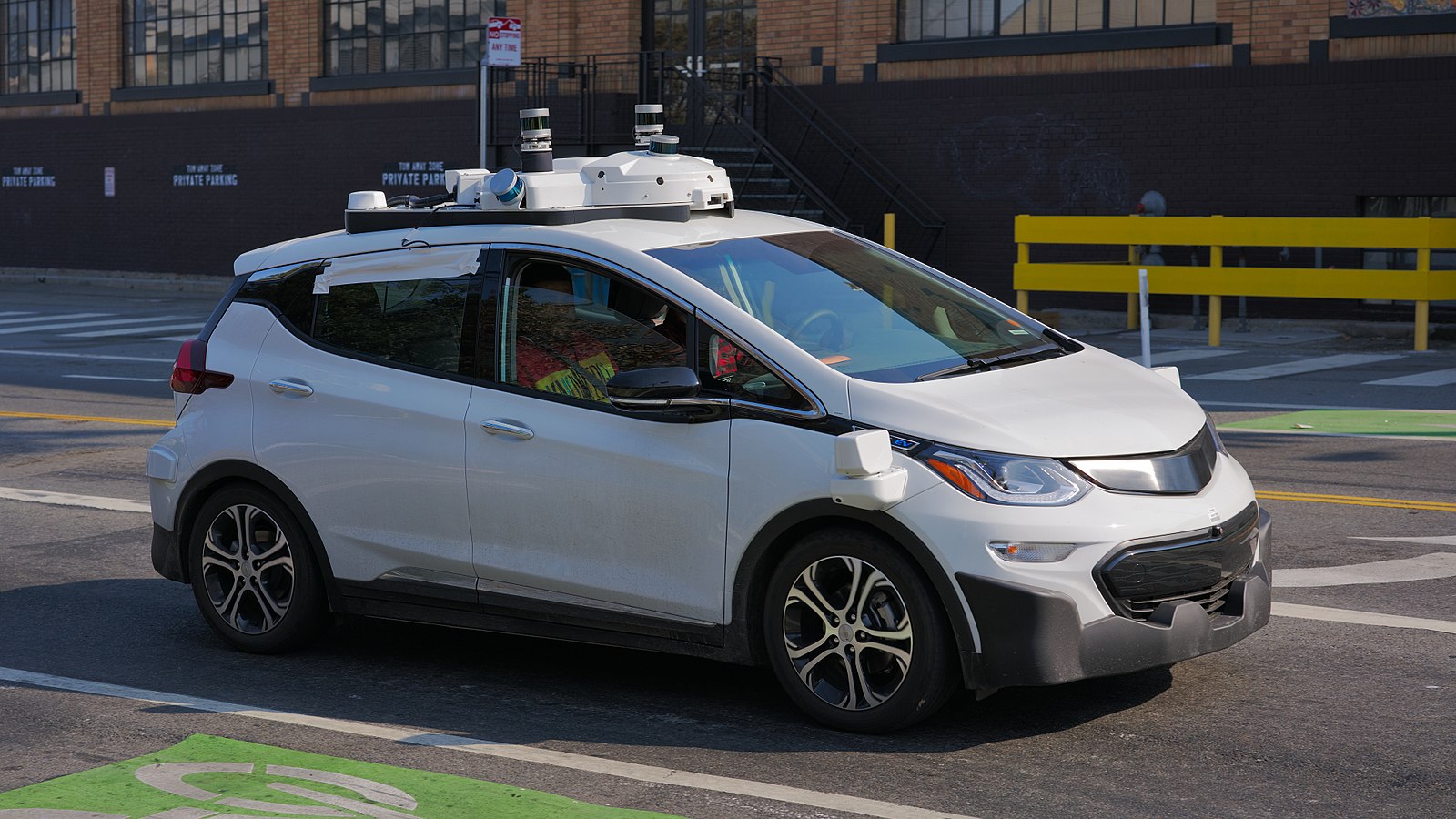
GM Cruise plans on releasing self-driving cars without steering wheels in 2019. Image source: Dllu
-
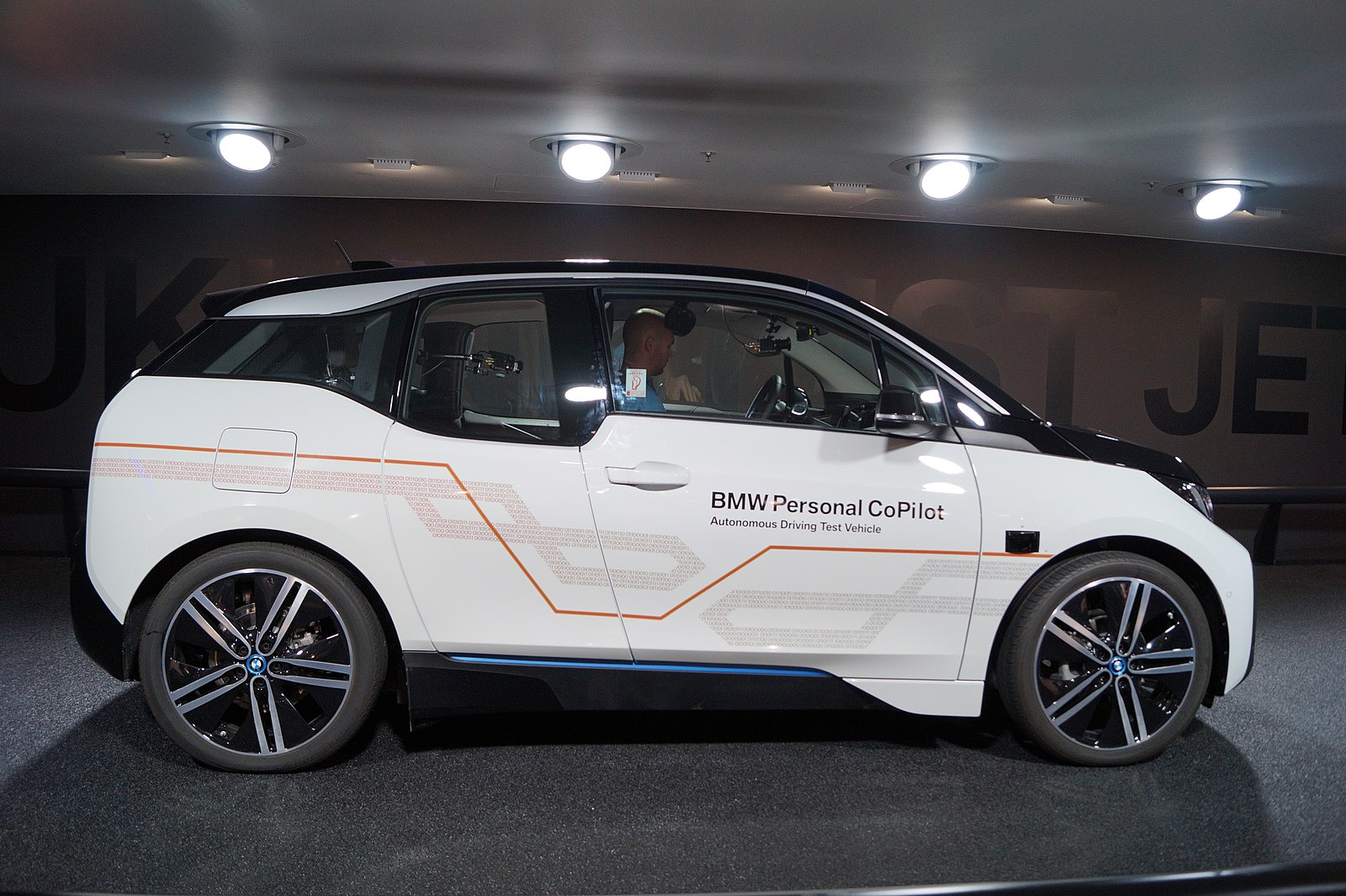
BMW’s senior vice president for autonomous driving aims for level 4 or 5 by 2021 Image source: NearEMPTiness
-
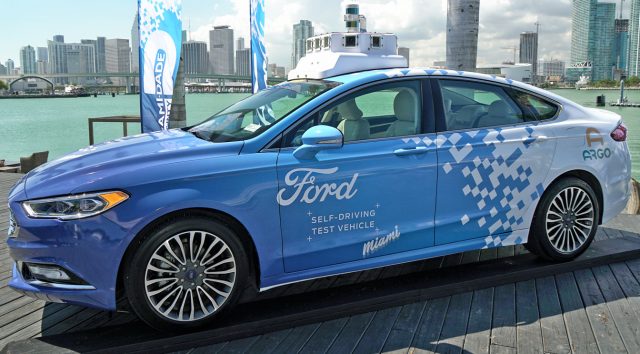
Ford also partnered with Uber and the CEO plans on making level 5 cars with no steering wheel or pedals by 2021. Image source: ExtremeTech
-
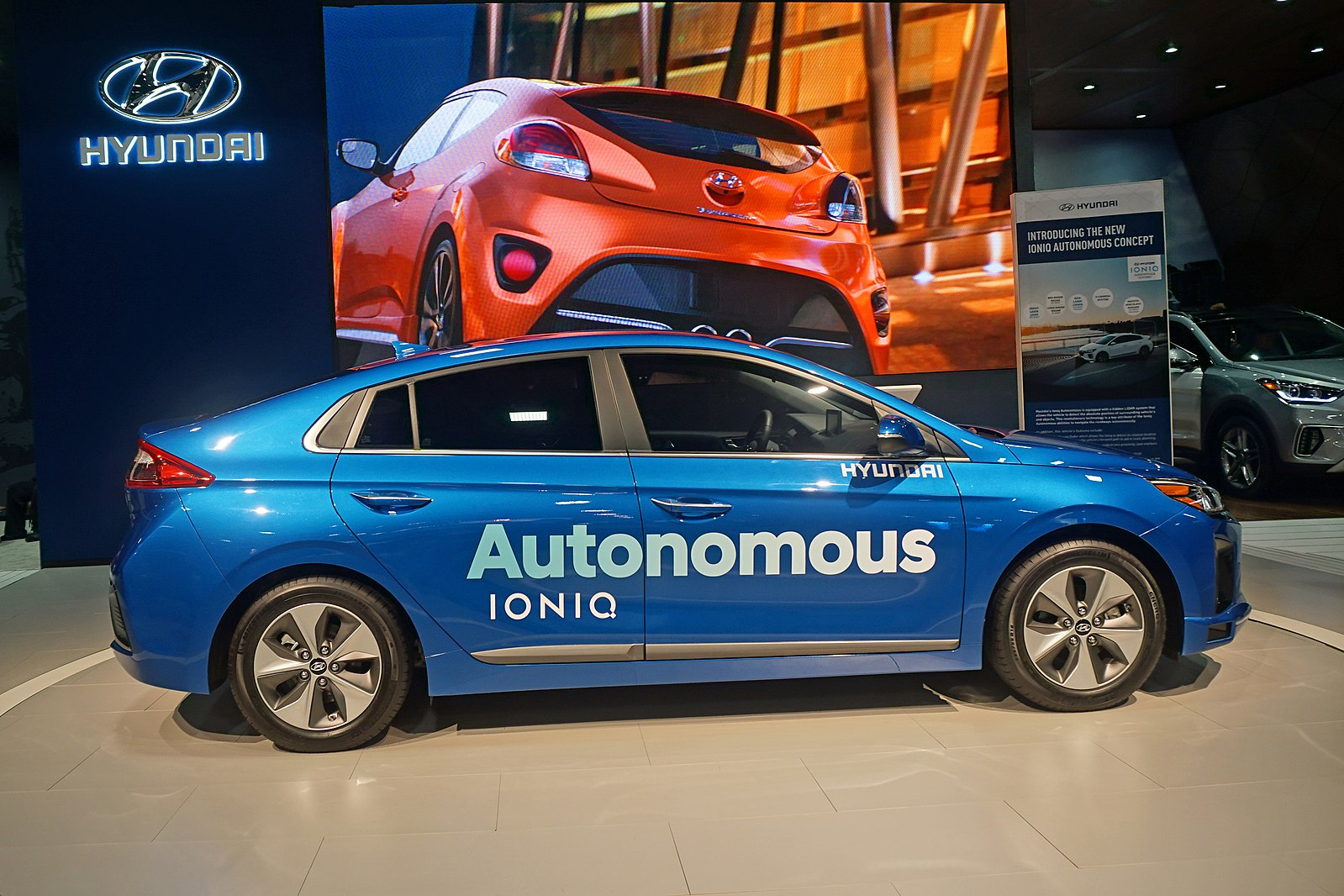
Hyundai is focusing on a more affordable car with highway self-driving capabilities coming in 2020. Image source: Mariordo
-
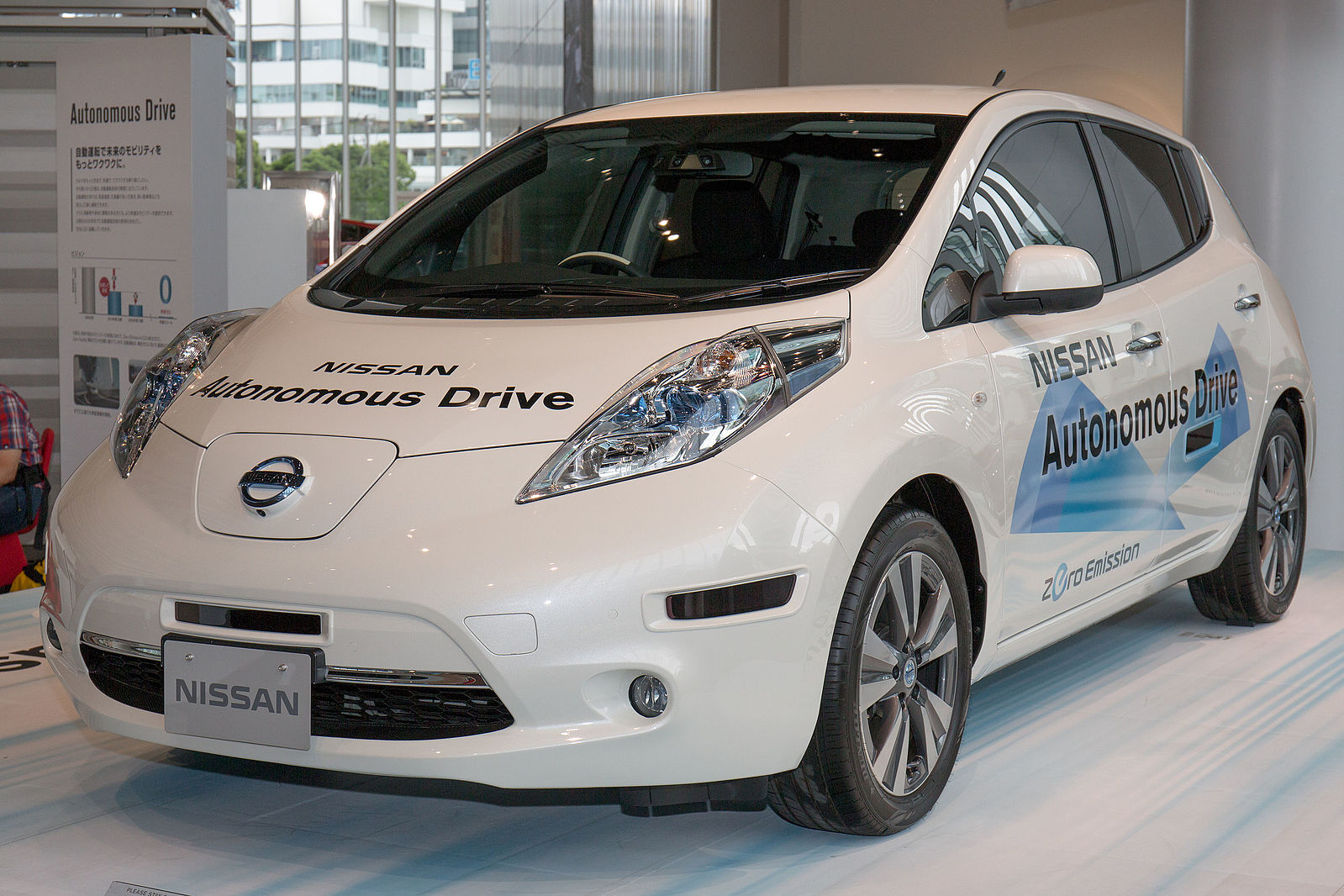
According to their website, Nissan plans to build autonomos cars by 2020. Image source: Morio
-
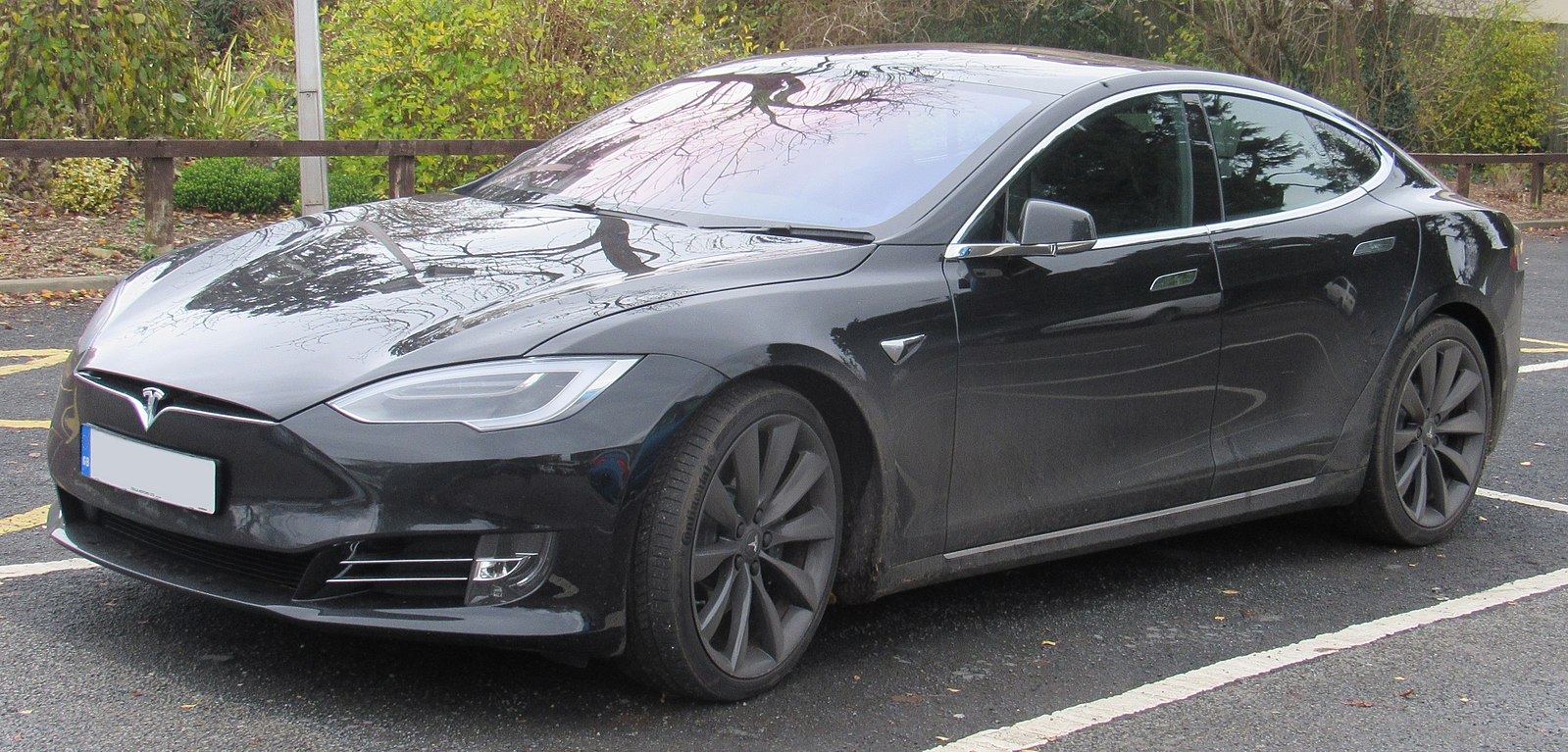
Tesla’s 2017 semi-autonomous model featuring autopilot. Image source: Vauxford
-
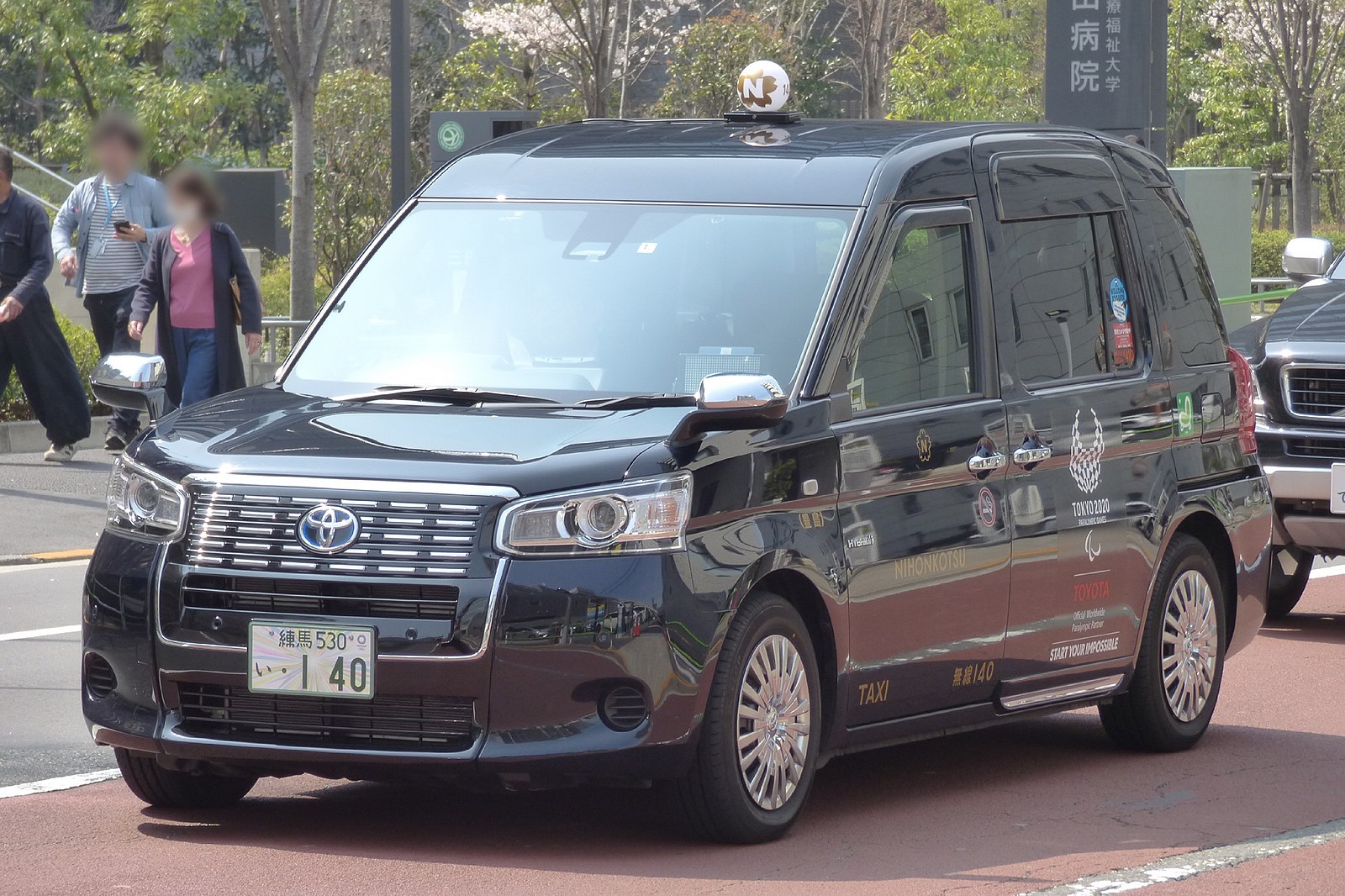
According to a Toyota blog post, Toyota aims to showcase their cars by the 2020 olympics. Image source: Vlchang
-
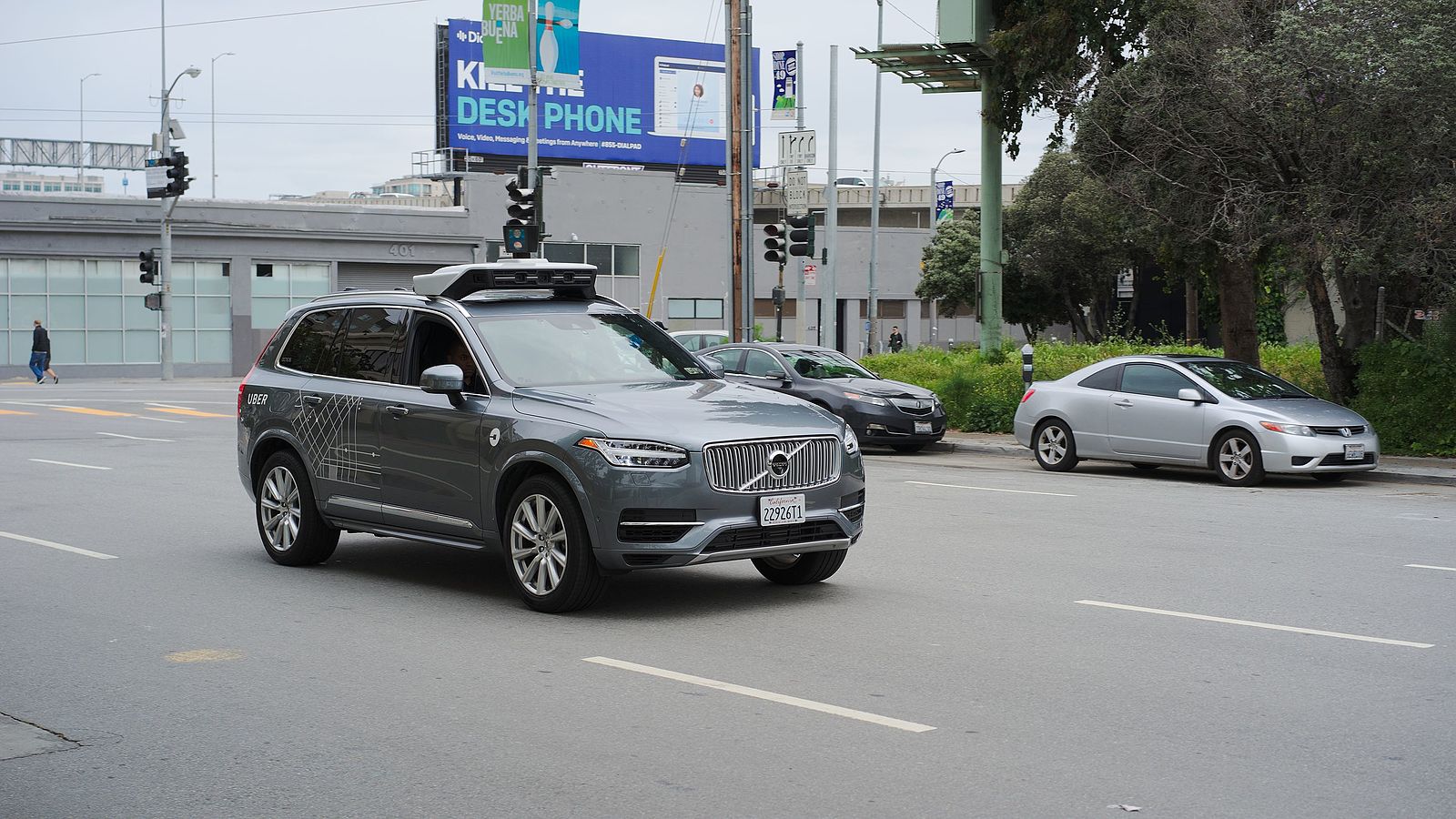
Uber, partners with Volvo, was responsible for the accident last March in Tempe, AZ. Image source: Dllu
-
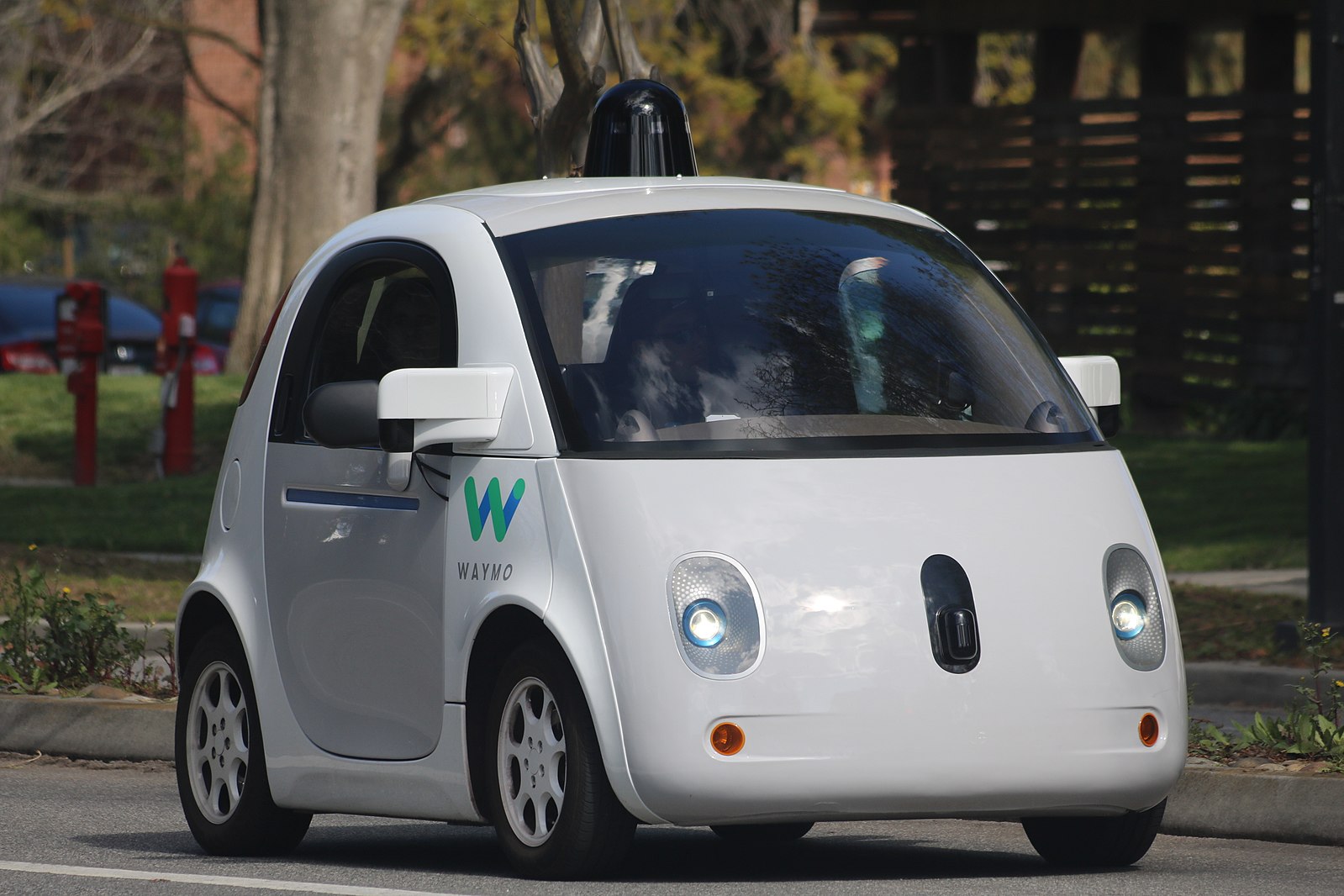
Waymo autonomous vehicle. Waymo released autonomous cabs in December of 2018. Image source: Grendelkhan
-
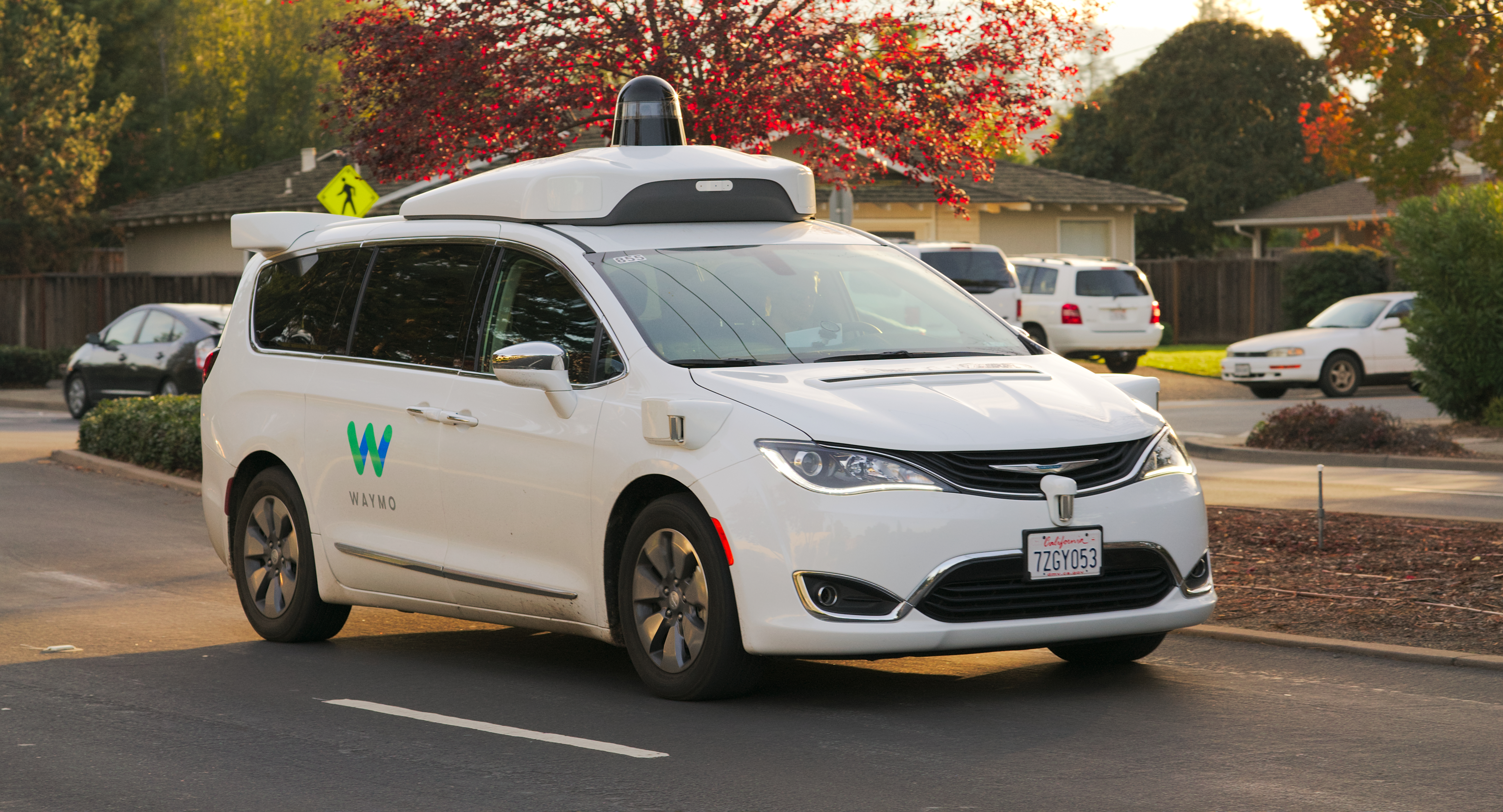
Tesla’s release of the Models X and S in 2017 are the frontrunners for semi-autonomous technology. The Model S and Model X both have a feature called autopilot which is cleverly marketed as having “full self-driving hardware.”
If you’re anything like me, you may feel like you’ll have no choice but to buy a self-driving car in the future. You may be wondering, how will the technology affect price points?
Affordability is a key concern for many people in buying a new car, regardless of self-driving capabilities.
As it turns out, Honda offers the same technology as Tesla’s autopilot for $20,441, which is certainly more affordable than a $85,000 Model X. Similarly to Honda, Hyundai is less concerned with being the first to the market for fully self-driving cars, instead focusing on affordability as a selling point.
What Do Companies Mean by Semi-Autonomous and Fully Self-Driving?
Like Tesla, many companies seem to be marketing their cars as fully autonomous whether or not that’s actually accurate. Regardless of attention grabbing press releases, it is important to note that fully autonomous cars are a long ways away.
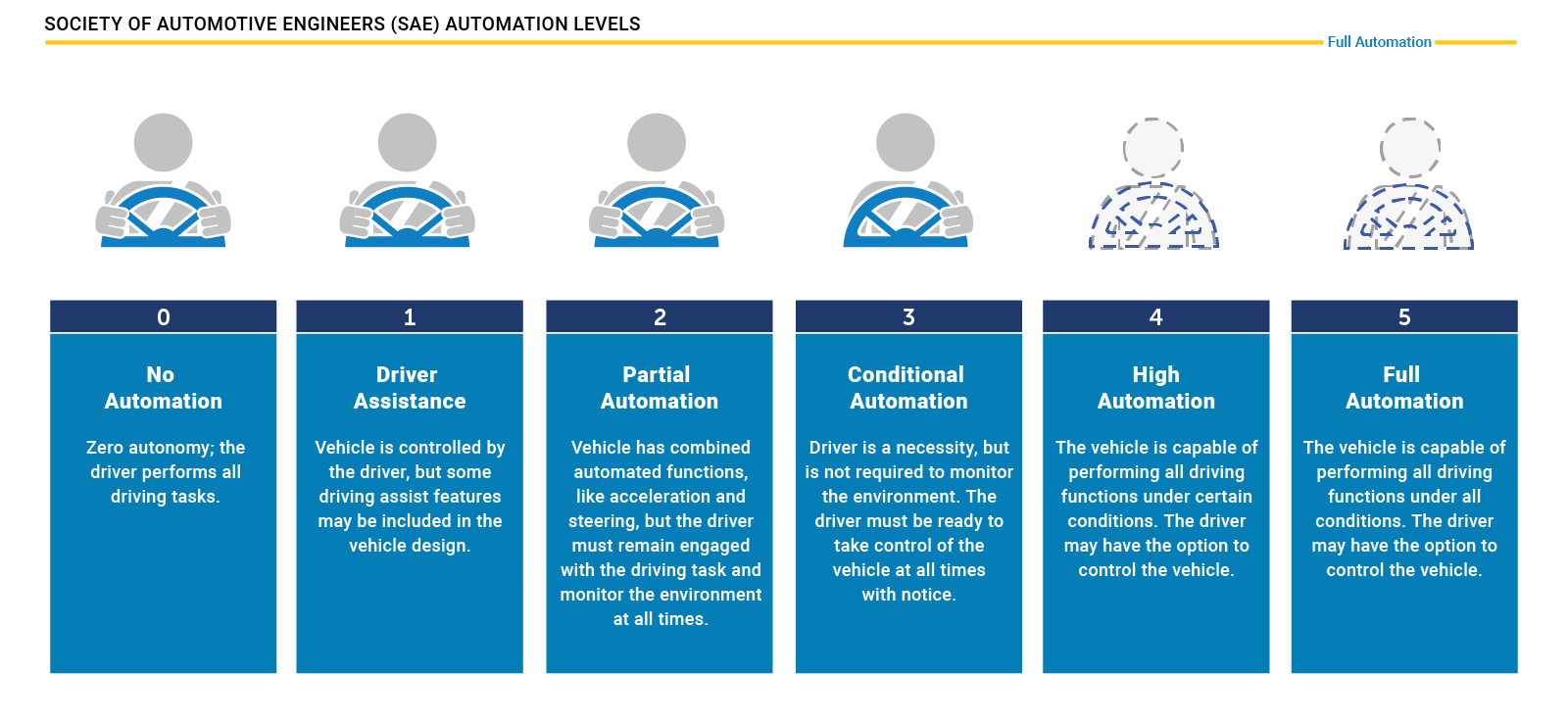
Tesla’s models are currently only at a level two, as the autonomous mode controls speed and steering while relying on humans to monitor the surrounding environment.
According to Toyota Research Institute CEO Gill Pratt, nobody is even close to a level five self-driving car.
“None of us in the automobile or IT industries are close to achieving true level five autonomy”- Gill Pratt, CEO Toyota Research Institute
Pratt isn’t the only one with doubts, and it is estimated that it’ll take about 30 years to create truly autonomous cars that can drive in any conditions at any speed.
Even semi-autonomous cars aren’t too impressive. Just look at this test run by IIHS.
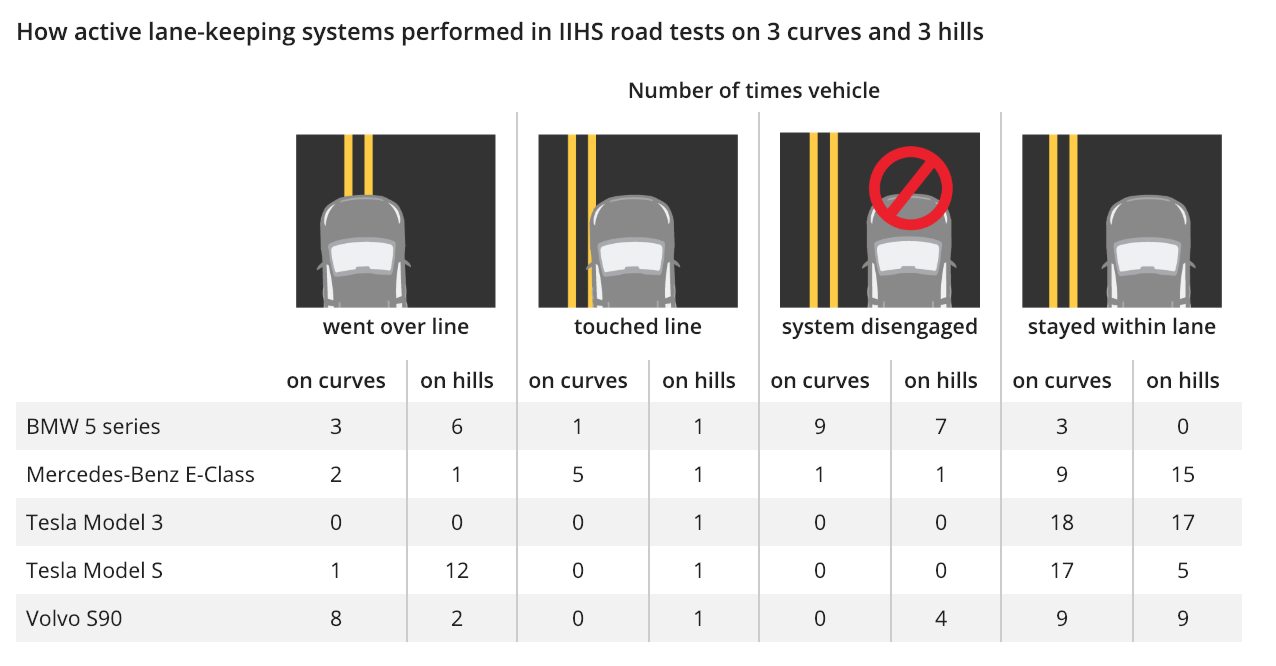
As we can see, different cars have different weaknesses in their technology. Tesla, although first in semi-autonomous driving, still has some work to do improving their safety.
How do Self-Driving Cars Work?
The cars typically have LIDAR technology which uses lasers to ‘see’ long distances. The cameras in the front are used to track lanes and see objects. Sensors are used for object detection and blind spots, and mapping systems help the car locate its position. A central computer manipulates steering and speed in response to all of these components.
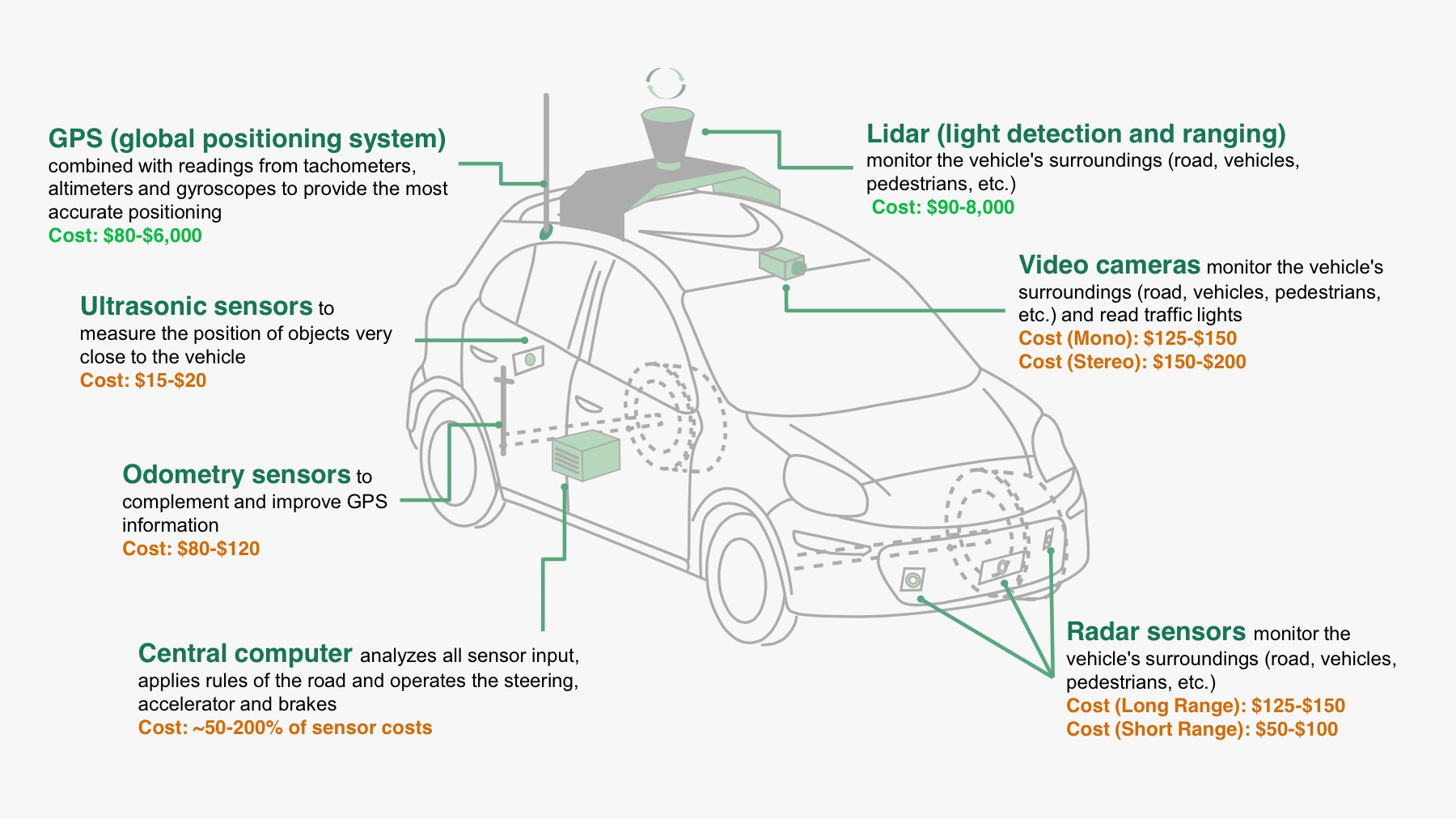
The cars can sense everything happening around it at all times and to great distances. This allows them to respond much faster than humans can, which makes them theoretically better than human drivers.
The autonomous car software in the central computer relies on machine learning to respond to different stimuli. The computer gathers data that they see through the lasers and cameras to assess an object and decide how to react to it.
This video explains how cars understand and react to the world around them. Source: Waymo
Since computers don’t have the ability to reason, they must consume a large amount of data and learn the best possible responses. This part of the reason why level five automation will take so long to develop.
In order to beat the competition, each company feeds their data to their own model and keeps that data extremely secretive. There’s a considerable amount of controversy around this for a few reasons.
Why is data so problematic?
- There has been speculation that companies only having to give up their data in the event of an accident jeopardizes consumer safety for the sake of profit.
- If companies pooled their data, there would be more footage available for programing the cars which would make them safer and more equipped to deal with different situations.
- Customers have no access to data which doesn’t allow us to make an informed purchase.
- The data that companies have comes from us. The perks found in new cars such as backup cameras, parking systems, and event data recorders all have the capabilities of storing and sharing your data. While you allow this when you sign the contract, it causes you to lose just a bit more privacy.
Companies’ lack of disclosure about how they use this data raises a lot of questions. How do our everyday driving mistakes impact the decisions these cars make? Just small stuff like going over lines, hitting squirrels, and dramatic swerves to avoid potholes may end up as responses to stimuli in the system. If they aren’t using our data to program the computers, what are they using it for?
How Safe Are Self-Driving Cars Now?
The short answer is that they are safer than human driven cars. The long answer is more complicated.
Its estimated that 94% of accidents are caused by human error which makes people statistically bad drivers. In 2017, there were 37,133 traffic deaths in all human driven cars but no fatal autonomous car crashes reported.
A few agencies like the National Highway Traffic Association support self-driving cars for a few reasons.
The first is safety, as they believe that by removing the element of human error, the amount of accidents would substantially decrease.
The decrease of accidents would provide economic benefits, as it would eliminate loss of economic activity, loss of life, and decreased workplace productivity.
Workplace productivity would also be increased due to less traffic congestion, also cutting down on vehicle emissions.
Increased mobility for disabled populations who cannot drive would provide societal benefits, enabling people to get place to place without depending on anyone else.
The two fatal crashes in March of 2018 were the only two of the year out of billions miles driven by self-driving cars. While self-driving car crashes rarely happen, the cars still aren’t ready to hit the road just yet.
Most of the marketing campaigns for self-driving cars rely too heavily on the safety benefits. While car crash fatalities theoretically would be reduced, there are still reasons to be skeptical of self-driving car technology now.
As of 2017, operators from all the companies
Disengagement: A deactivation of the autonomous mode when a failure of the autonomous technology is detected or when the safe operation of the vehicle requires that the autonomous vehicle test driver disengage the autonomous mode and take immediate manual control of the vehicle.
testing in California reported disengagements, and although the 2018 reports have not yet been released, one can speculate that disengagements still occur. The term disengagement refers to when the operator takes over control of the vehicle for any reason, and there are many reasons why.
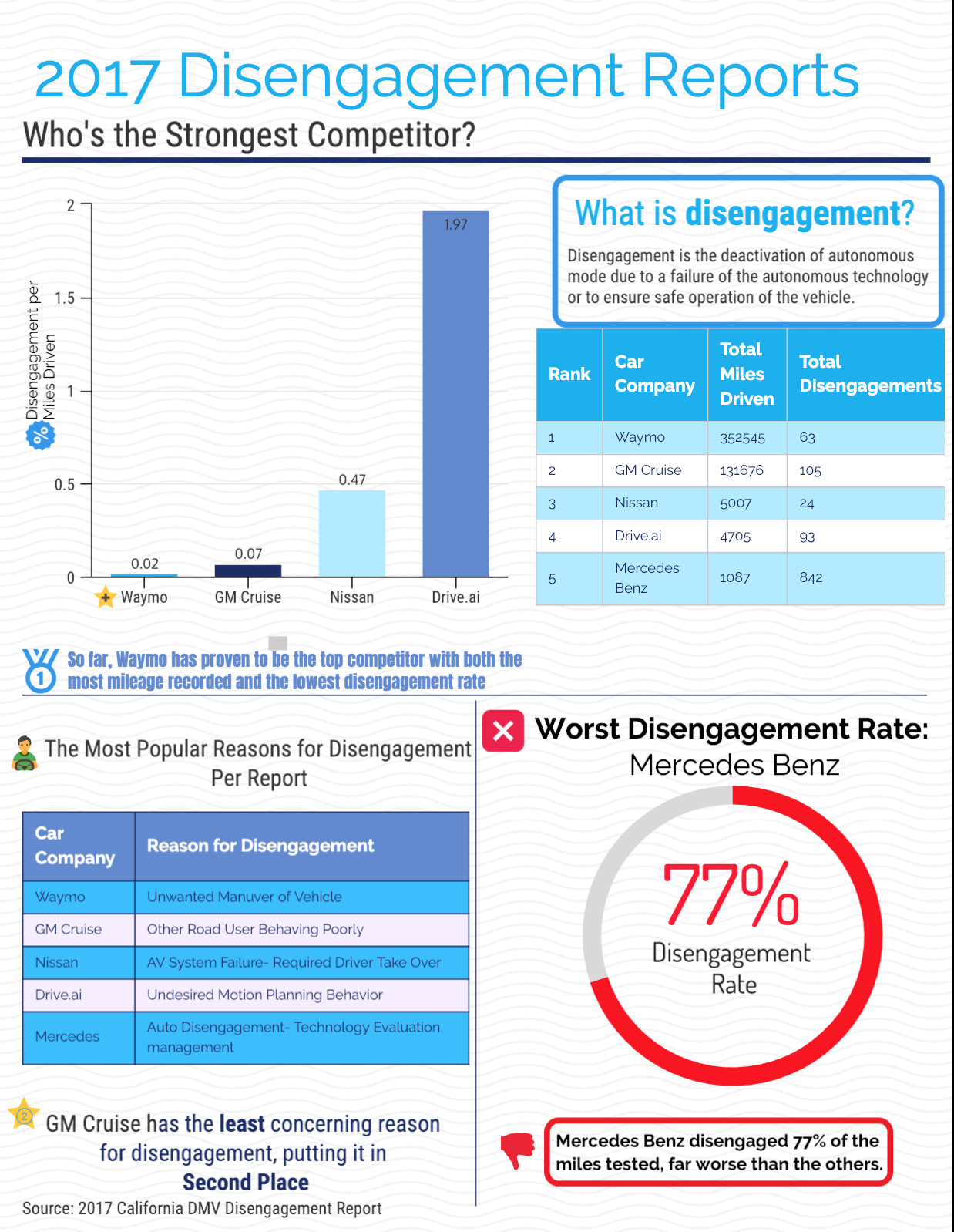
While some cars may be safer than others in terms of these disengagements, they should be at 0% before removing the steering wheel.
Even if We Have Self-Driving Cars, Will People Accept Them?
While the benefits of self-driving cars seem to outweigh human drivers and their accident rates are much lower, I’m still skeptical of how this drastic change will actually happen.
The residents of Tempe, Arizona rightfully distrust the self driving cars after the accident in March. Some residents have even been vandalizing the cars, slashing their tires, and threatening drivers all to portray the same message: We don’t want you here.
The people feel like they had no say in deciding whether self-driving cars could test in Tempe, and they worry about the safety of their neighborhoods. Now imagine how you would react if the same thing happened in your community.
If you feel like the only person who isn’t ready for this change, you’re definitely not alone. A survey ran by the American Automobile Association shows that the majority of people are uncomfortable with the idea of self-driving cars.
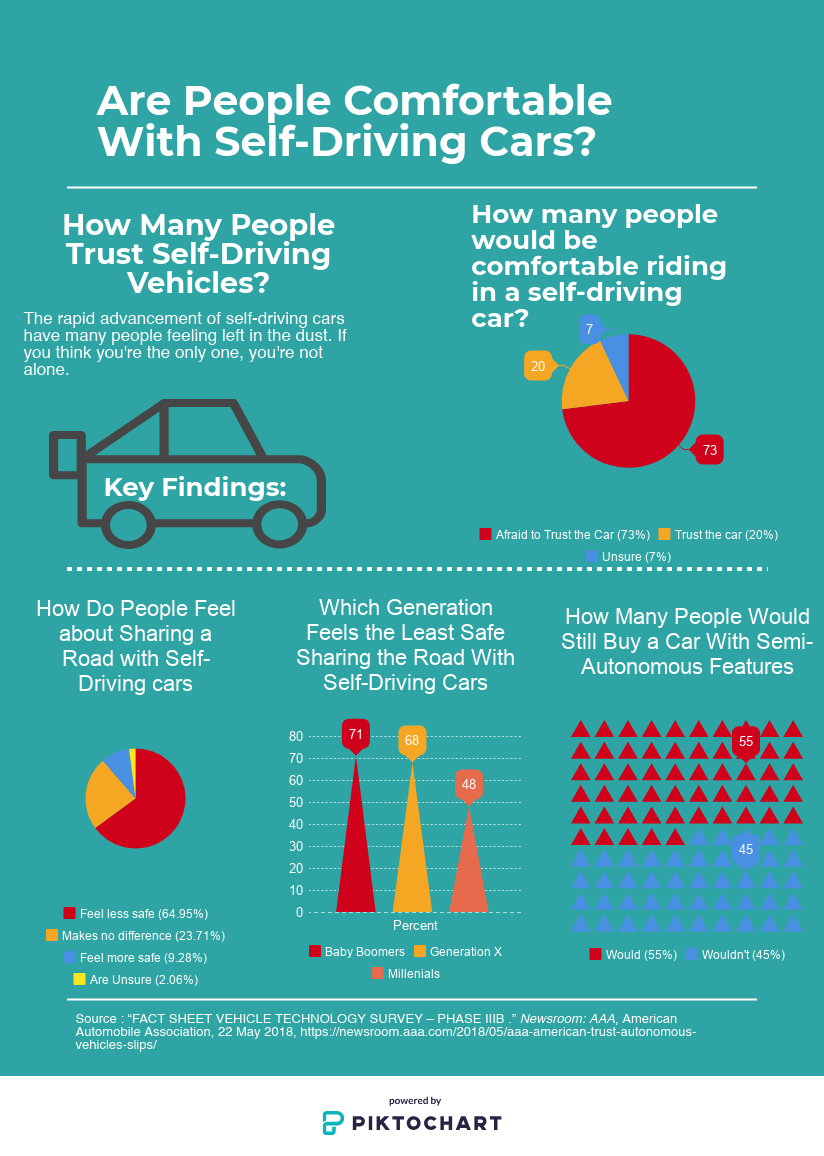
With the majority of people distrusting the cars, maybe companies should slow down their releases and start considering how they can make their cars better instead of sooner.
Final Thoughts
A few months ago, as I was driving through a parking lot in Mountain View, California, I saw a self-driving car for the first time in my life. As a girl who moved to Silicon Valley from a rural town, I was puzzled by what I saw. Admittedly, I hadn’t even heard that they were testing the cars before I saw one and reading up on the topic made me feel like there was no time to get accustomed to the idea before they took over the roads. In general, I still remain less than impressed with the technology that makes self-driving cars possible. Instead, I worry about the safety and reliability of these cars as more car companies work towards a fast delivery of their own self-driving cars.
No Way Out? Sexual Harassment and Forced Arbitration
It is very easy to sign your name on an employment contract when your a newly hired employee at a large company. The smile you are displaying to your employer is one of kindness now. However, foreshadowing to the future that employer you are smiling at is now sexually harassing you- I’m here to warn you, under the dress code and vacation day rules, in that very fine print is a clause that- with your signature has just prevented you from taking your life back into your own hands by getting justice.
Sexual harassment in the workplace is a PROBLEM!
A research was done to try to see just how prevalent sexual
harassment is seen in the workplace. However, estimating
sexual harassment rates are difficult. Doing some
looking I found that about 5 million employees are estimated to have been
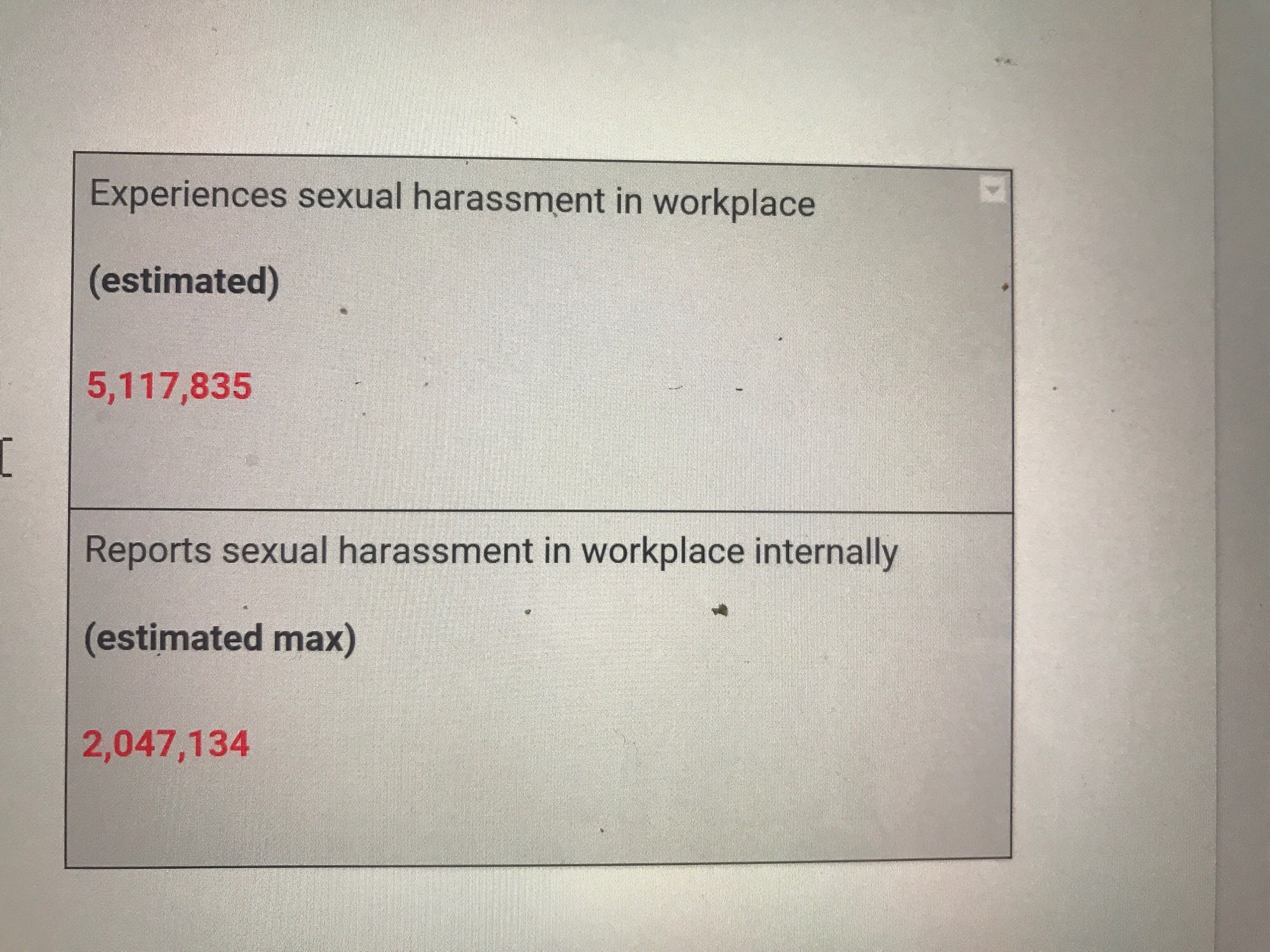
sexually harassed at work every year. This large number is not the only baffling piece information- as stated previously, sexual harassment rates are difficult to calculate. The reason for this is because (99.8%) of people who experience sexual harassment at work never file formal charges agonist their harasser.
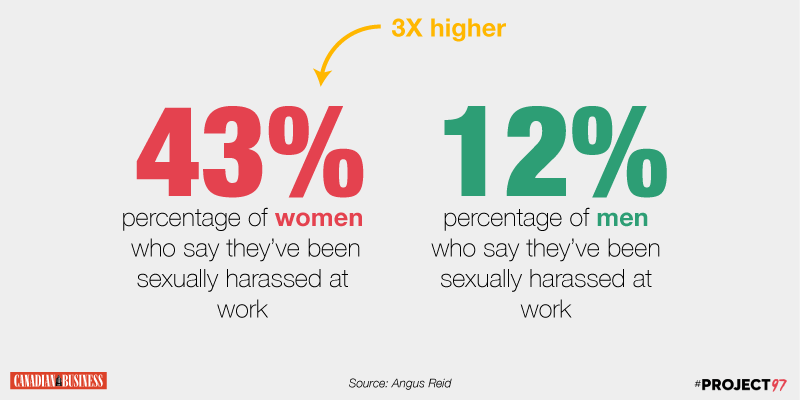
Looking at this information in a different angle-this statistic shows that women are 3x more likely to experience sexual harassment compared to men.
WITH THIS HIGH NUMBER, HOW IS IT POSSIBLE 99.8% OF SEXUAL HARASSMENT CASES GO UNREPORTED?
Removing the ability to sue- FORCED arbitration
Purposely hidden in employee contracts in the fine print are forced arbitration clauses. This is dangerous to an employee because in the event of a dispute with the corporation that will warrant the need of a lawyer, forced arbitration says that an employee cannot take their case to court but instead has to go to a private arbitration forum designed by the very corporation the dispute is against.
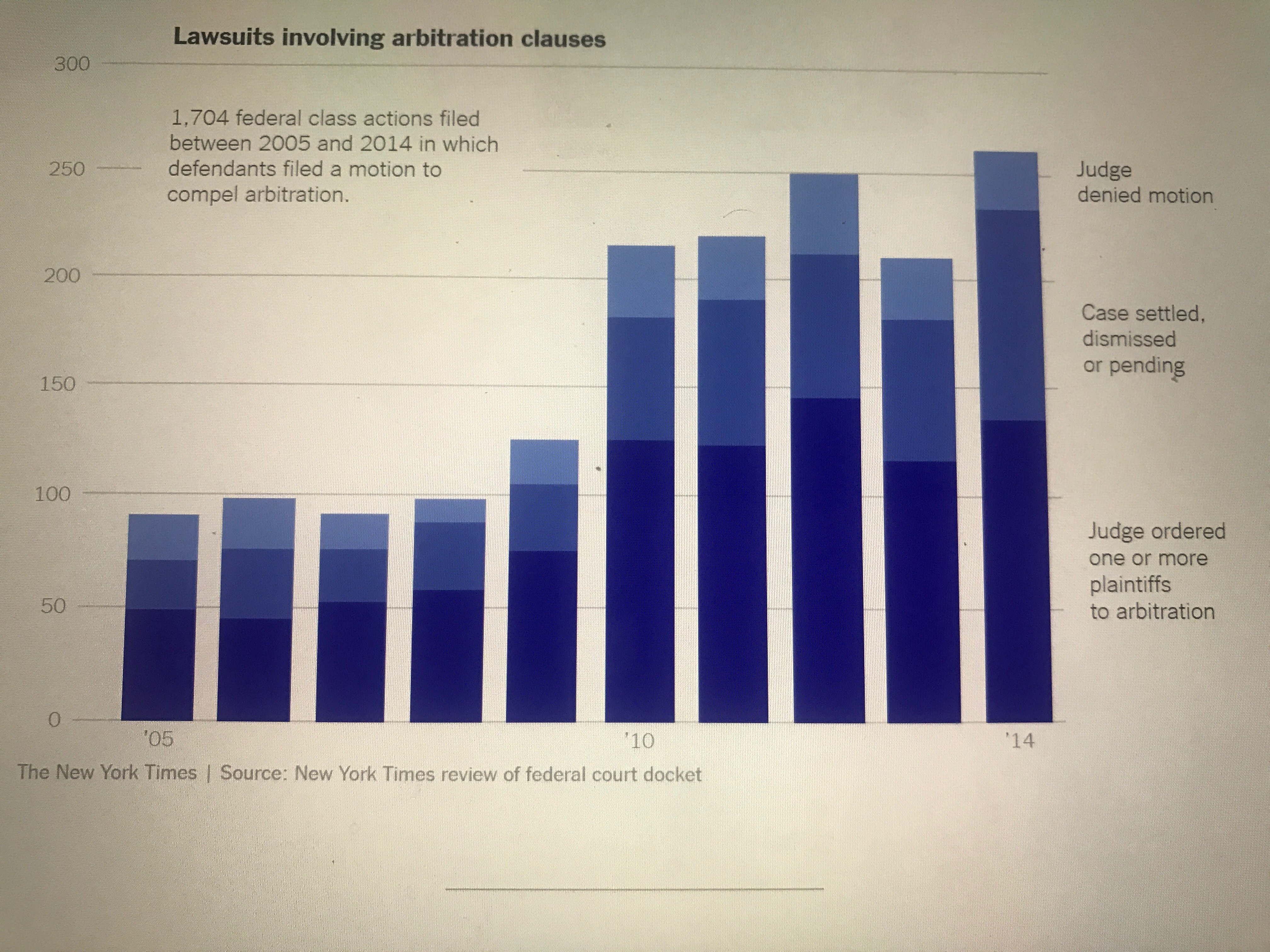
Employees are often forced to sign these clauses in order to get hired and often don’t know they’ve signed-away their legal rights until it is too late.
This data chart shows that arbitration is communally used between company disputes.
WHY IS THIS?
Big companies choose to have this clause in their employee contracts is solely based on the fact that they care more about their image or “motto” than their employees.
Julia Wong states that “Google recently dealt with a case were their “Bro-Culture” “allowed the daily sexual harassment of female software engineer Loretta Lee”.
Is All arbitration bad?
No, not all arbitration is bad. The overall term of arbitration is the ability to have an alternative method of resolving disputes.
Voluntary VS Forced
Voluntary arbitration– This dispute is handled just like the name suggests- in this case both sides of the parties have an equal opportunity to present their case, all in the hopes of solving a dispute in a simplified and in a non hostile setting.
Forced arbitration– This method is seen when a company mandates an employee to submit, and follow how that company wants to proceed with the dispute. By submitting to a companies decisions the employee is “required to waive their rights to sue”. ALL FORCED ARBITRATION DECISIONS ARE BINDING
[what does binding mean?– all parties are expected to follow the decision that was ruled. ]
Forced arbitration is NOT spotted easily
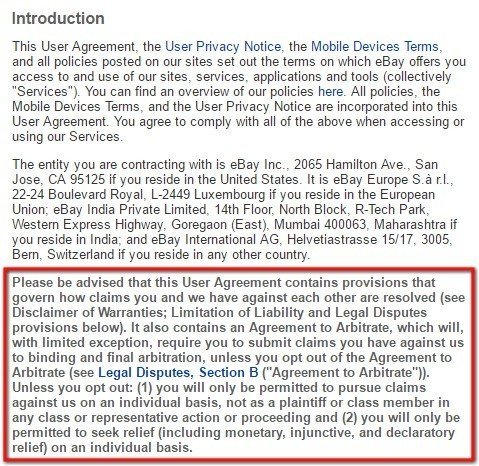
Many companies use jargon that is not understood by a person who is not familiar to the law. Some examples that are used are terms such as, dispute resolution mechanism.
This document seen is a REAL contract, in the red box is the clause that forces the signer in forced arbitration.
THIS IS HOW THEY GET YOU!
In a sexual harassment case that involved Fox News and Gretchen Carlson, Carlson spoke of the problems she faced during her cases that involved forced arbitration. This forced arbitration clause prohibited her from suing Fox directly in court for sexual harassment
Lets look at this at another angle- What happens if YOU were forced into an arbitration clause?
You can only file alone–
A recent ruling passed by the Supreme Court states that employers have the right to force workers to waive their right to bring a class action (group) law suit.
[What does class action mean?- This is when a large group of people have been harmed in similar matter and these individuals sue all together. Benefits to filing in a group against a large company will get the attention of that corporation, as well as, the individuals in the group can all contribute to the legal fees.
Being forced to file a sexual harassment claim on your own is a daunting thought.Meanwhile, your single claim most likely will NOT catch the attention of a large company especially if the forced arbitration clause forces you to file alone.
Your cost of legal fees–
Not only will someone who was sexually harassed has the possibility of going up against big companies such as Google or Uber who has millions of dollars to spare,depending on the the employment agreement the individual who lost the arbitration case may be required to cover all of the costs that was used during the dispute process including travel fees.
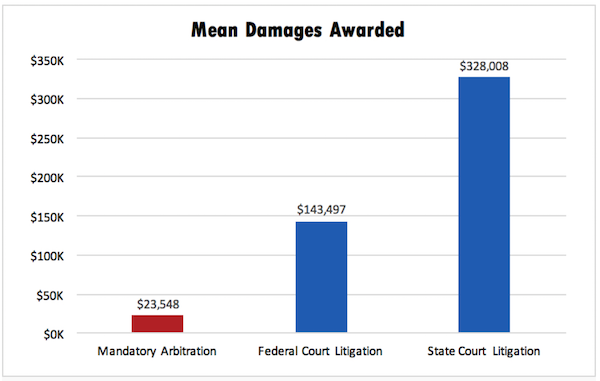
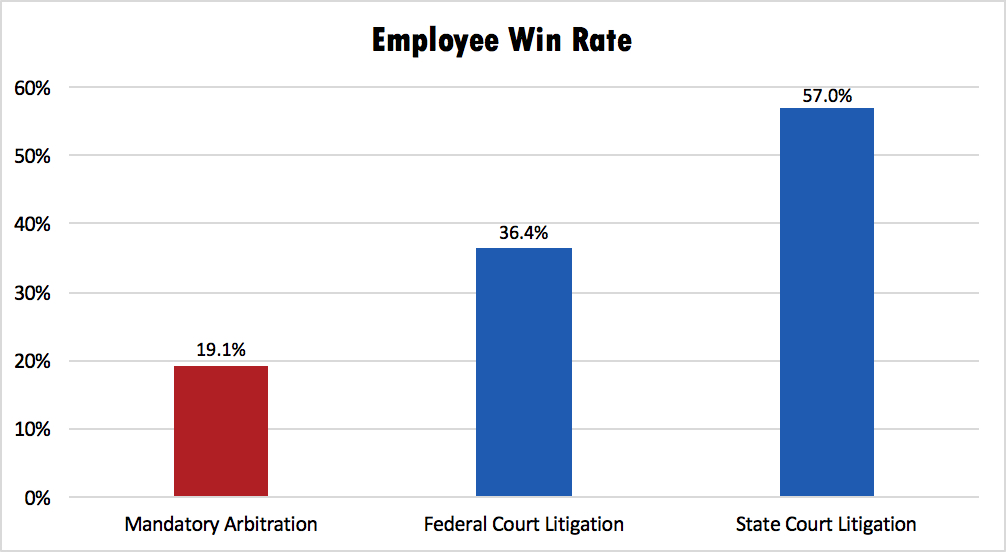
This is not an ideal situation to be in, especially when according to the data chart that plaintiffs who win cases are awarded very little money in terms of compensation.
Your chance of wining is slim– In the case of forced arbitration, the company/employer has the sole right to provide the arbitrator. This means that the arbitrator is picked and paid for by the company. The bias in this situation is very extreme. An arbitrate is not bound to the law nor legal system into consideration when making decisions.
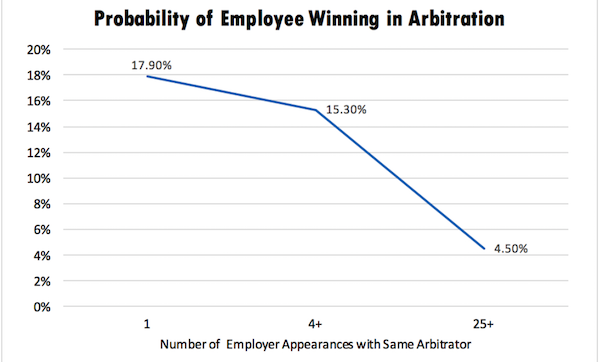
Both of these chats show that the decisions in forced arbitration cases are not easily nor commonly won.
Don’t worry there is still hope!
Major companies such as Microsoft, UBER and Google all are working towards getting RID of the forced arbitration clause in their employment contracts. This is a step forward in the right diction because now victims of sexual assault will not have to faced the hurdles that is common in arbitration. By getting their day in court employers are no longer going to win.
Another method that is being used to get rid of forced arbitration entirely is the Ending Forced Arbitration of Sexual Harassment Act of 2017 written by Senator Kristen Gillibrand. She proposes to make it illegal for ALL contracts to have anything to do with forced arbitration.
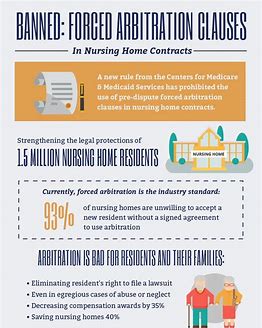
In the end, many efforts are being taken, so that companies and employers can start to be held accountable for their actions.
WORK CITED
1. Center for Employment Equity.” Statistics | The Poisson Distribution, UMass University Communications, www.umass.edu/employmentequity/employers-responses-sexual-harassment.
2. Wong, Julia Carrie. “Google’s ‘Bro-Culture’ Meant Routine Sexual Harassment of Women, Suit Says.” The Guardian, Guardian News and Media, 1 Mar. 2018, www.theguardian.com/technology/2018/feb/28/google-lawsuit-sexual-harassment-bro-culture.
3. Arbitration.” About NACA|Consumeradvocates.org, www.consumeradvocates.org/for-consumers/arbitration.
4. What Is a Binding Precedent?” Reference, IAC Publishing, www.reference.com/government-politics/binding-precedent-e09832da3c698e35.
5. The Problem of Sexual Harassment and Forced Arbitration.” Correia & Puth, 13 June 2018, www.correiaputh.com/news/problem-sexual-harassment-forced-arbitration/.
6. Class Action Lawsuit vs. Private Lawsuit.” FreeAdvice, law.freeadvice.com/litigation/class_actions/class-action-vs-private-lawsuit.htm.
7. https://www.supremecourt.gov/opinions/17pdf/16-285_q8l1.pdf
8. Beware of the Fine Print – Forced Arbitration Clauses in Employment Contracts.” WITI, witi.com/articles/1148/Beware-of-the-Fine-Print—Forced-Arbitration-Clauses-in-Employment-Contrac/.
9. Gillibrand, and Kirsten. “Text – S.2203 – 115th Congress (2017-2018): Ending Forced Arbitration of Sexual Harassment Act of 2017.” Congress.gov, 6 Dec. 2017, http://www.congress.gov/bill/115th-congress/senate-bill/2203/text?format=txt.
Deaf Culture: In Between
Benice Mach
When I heard that my college offered American Sign Language (ASL) as a course, I ran to the department to get on the waiting list on the day of my orientation. It took me three years to finally get the class but the experience was like no other class I had at college. The class was small and we barely knew each other but the feeling in the room was also so comforting. Not only did we learn signs, but we also learned about this close knit community and the medical devices and skills that society invented in hopes to make them “normal”. The biggest surprise from this class is that there are people in the community that pride themselves in being Deaf and hold repulsive feelings with these technological advances that can normalize them. They see this as a threat to their culture and instead pride themselves in their language of ASL.
We began to fall in love with this community and how different it is compared to what we would have expected. We learned to admire and embrace instead to pity their circumstances. From this small knit community, we were able to understand that being different is not necessarily a bad thing. Instead it helps us understand who we are and what makes us so unique.
For this community, the choice between technology, skills, language or a mix is no black and white answer.
What is the Deaf Perspectives on Assistive Tools & Skills?
Assistive tools and skills that help mainstream the deaf into the hearing world has four categories: cochlear implants, hearing aids, lip reading and speech therapy.
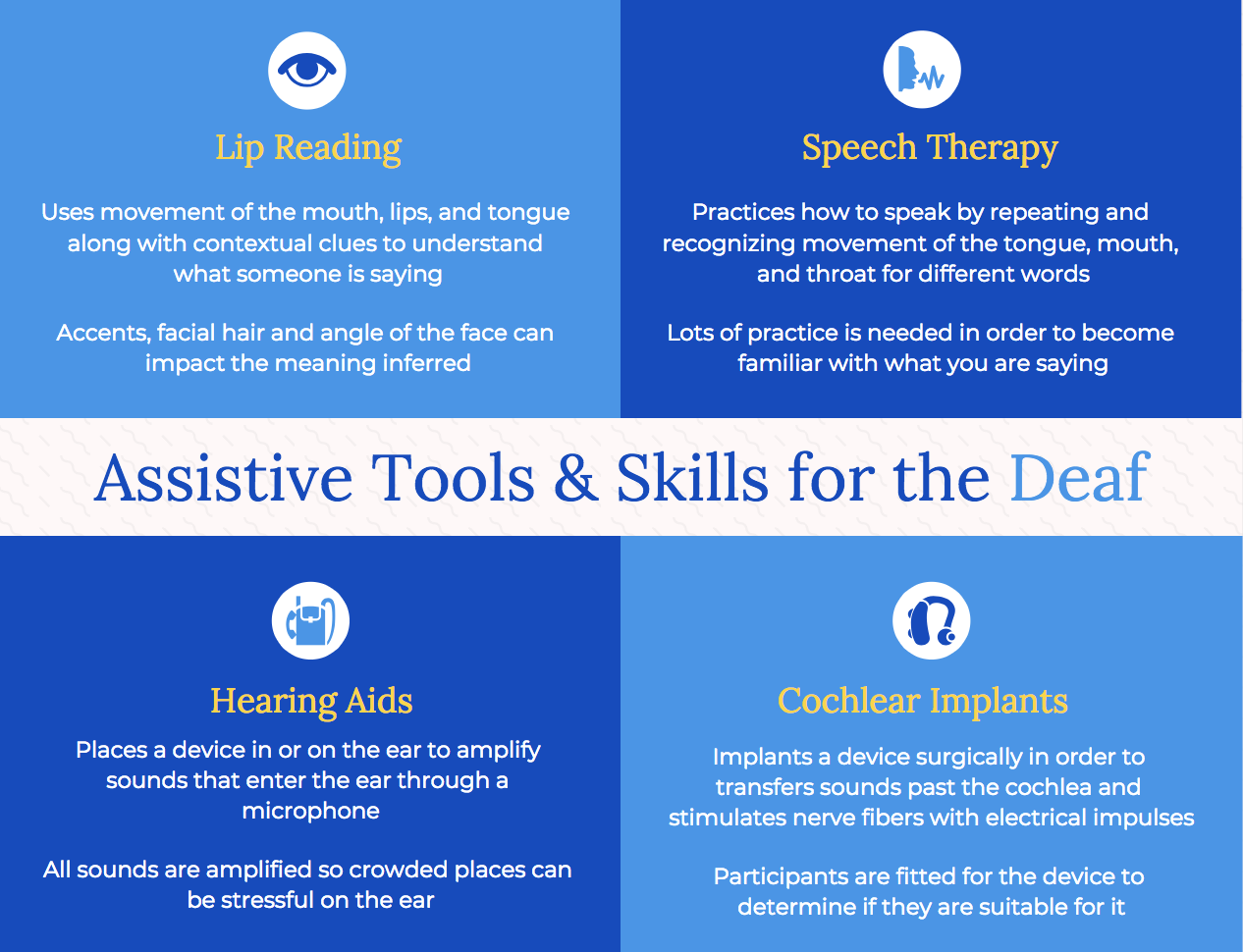
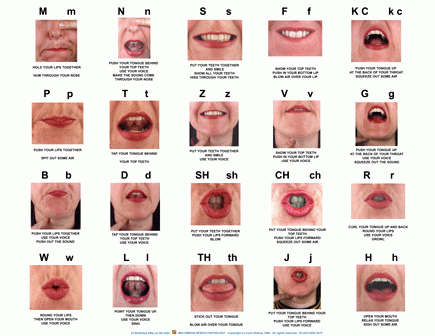
Lip reading is a technique that helps deaf people understand what another individual is saying. However, there are sounds that can be hard to distinguish from each other and a lot of the time only 30 to 45 percent of the spoken word can be understood through lip reading only. There are other factors such as accents, facial hair, and direction a person is facing that can all affect the effectiveness of lip reading.
Speech therapy is learning to talk through recognizing movement of the tongue, mouth, and throat. This could be difficult for people who are profoundly deaf or can barely hear. This also requires extensive practice to be able to recall different words.
A hearing aid is a device placed in the ear or on it depending on the product. It uses a microphone to amplify sounds that enter the ear. This is most commonly used for people who have hearing loss. As the hearing aid amplifies all sounds, it can be tough on the ear in loud and crowded places. This also requires batteries so it would be helpful to carry a change of battery at all times.
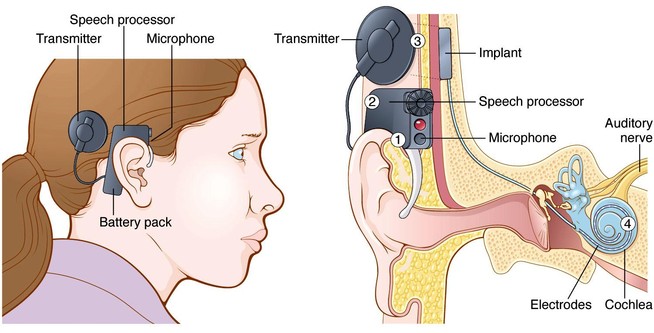
The cochlear implant (CI) is a device that takes sound and “bypasses the damaged hair cells in the cochlea and stimulates the remaining nerve fibers with electrical currents.” There is an external part and internal part that is planted through surgery. They are very commonly identifiable as it has an ear piece and a wire that connects a circular transmitter to the back of the head. Participants also have to be fitted for the CI to determine if they are a good candidate.
These are all ways that help the deaf interact with the hearing world. Medically speaking, it makes sense for the hearing world to want to make the deaf hear since innately we are supposed to be able to hear. However, believing that deaf people need to be fixed is assuming that they are broken. This contradicts the beliefs of the Deaf community as they take pride in being Deaf and how it gives them their identity. Hearing aids can be helpful but when you need a battery change or if you are in a rowdy place, communicating would be a problem. Lip reading and speech therapy are all skills that need to be learned through practice which makes it especially hard when you do not know what you sound like. Without sign language to supplement these other skills or tools it can be unimaginably hard to really learn what is going on. Communication is especially important to children their first few years. Without a way to express themselves and understand others early on, this would slow down the development of their language skills making it harder to learn in the future. Hence, even if lip reading and speech therapy are difficult to learn when you are not aware of what you sound like, an outlet to communicate such as sign language will be able to guide learners so that they at least understand how to improve or what they are doing wrong.
The biggest uproar to the methods introduced to “fix” the deaf is the cochlear implant. This has raised great anxiety in the Deaf community as they fear their culture will become extinct as time goes on. Juliet Corwin received a cochlear implant when she was a baby. Her parents thought the cochlear implant could open more opportunities for her but did not want her to miss out on the culture of being Deaf. Her parents decided to give her a cochlear implant and hired a Deaf American Sign Language teacher to teach her ASL. Unfortunately, after the teach realized she had a CI the teacher never came back. They were able to find a teacher that respected the family’s decision but in reality Corwin never felt fully Deaf or fully hearing.
Technology and skills that mainstream the deaf into the hearing world can be helpful but can also violate the foundation of their Deaf identity that being deaf is subject to change. Instead, they like to use sign language to communicate.
What is the Language of the Deaf?
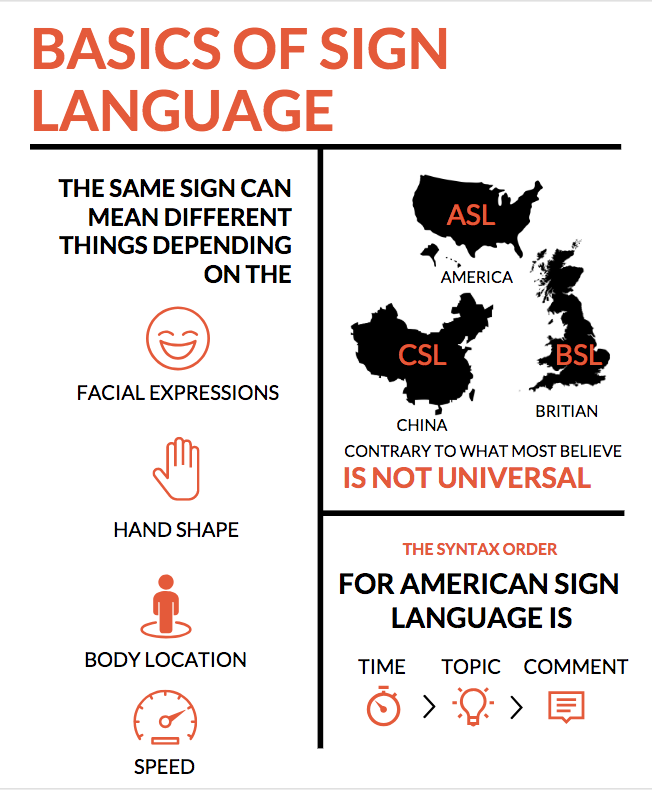
Sign language is the most common language for the deaf. They use their hands and facial expressions to communicate. Signs can also differ by their location relative to their body, speed and their hand shapes. It also has its own grammatical rules such as everything is signed with the order of time, topic and then comment. With a combination of all these elements, it creates a natural method for deaf people communicate. However, sign language is not universal. Just like how there are different languages and dialects, sign language also varies from country to country. Americans have American Sign Language (ASL). Britain has British Sign Language (BSL). China has Chinese Sign Language (CSL).
Sign language is a big part of Deaf identity because it connects them and uses their amplified sense, which is the visual, to interact. The Deaf community will not need to use technology to “hear” you or focus on your mouth movement to understand you. It gives them the opportunity to relax and interact without worrying. Furthermore, sign language is very expressive and lets them portray themselves as much as they desire. This may come off as different and repulsive to the hearing world as hearing people use their tones to distinguish mood. As beautiful as the language is not everyone will know it or be willing to learn about it. People may judge or discriminate but the understanding of each other and the circumstances that are tied to being deaf is what ties the community so close that they would not change being deaf.
What is Deaf Gain?
Deaf versus deaf
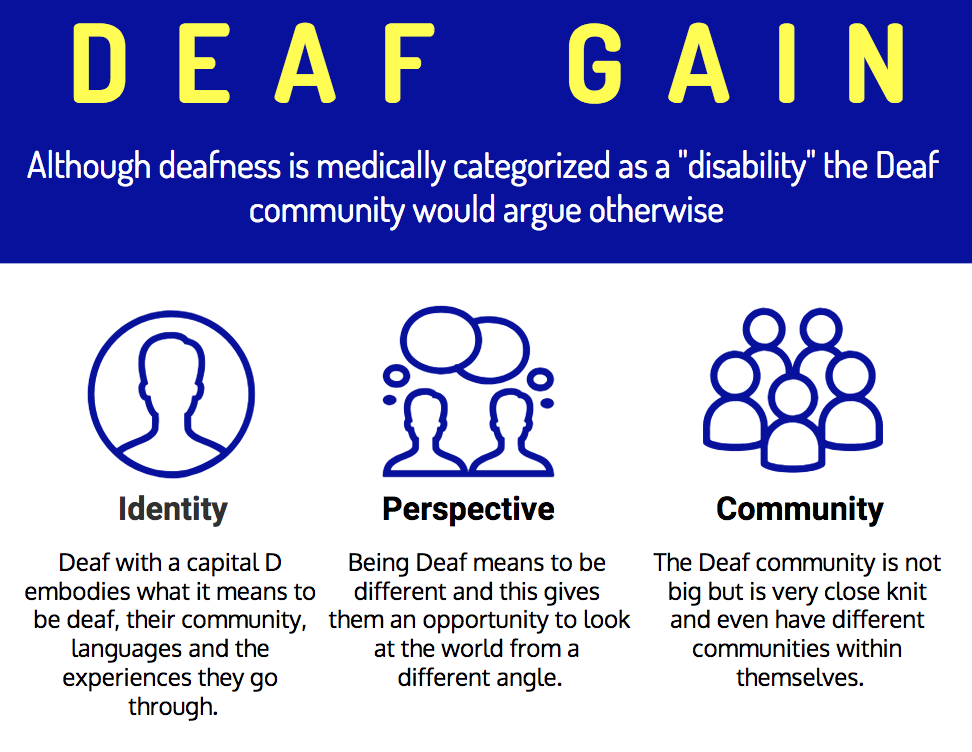
The embodiment and embracement of being deaf all lies in the capital D, Deaf. The capital D is a representation of their community, their language and the experiences that they go through. While deaf, with a lowercase d, represents the act of not hearing.
Perspective
Being deaf gives these individuals a perspective of what it is like to be different. They understand what it is like to feel undermined, doubted and discriminated against. Not everyone will take the time to learn about someone else’s culture and more often than not they will judge someone for being different. This puts them in a position that society deems them to be inferior, yet they embrace it because it teaches them to look at the world differently, to communicate differently and to look for others who understand them. The identity of being Deaf, the power to communicate through sign language and the perspective they get from being different is what they would define as “Deaf Gain”.
Community
The Deaf community is not big. There is a good chance that you will already know them from Deaf dinners, get-togethers and other community events. Even if they are a small community, they also have communities within themselves.
Every month, the Southern Tier will organize a get together for the Deaf community. A group of deaf and hard of hearing individuals along with students who are passionate about Deaf culture will go to Great China Buffet in Johnson City to gather and mingle as a community. When you walk in the restaurant, you see hands flying in the air and dramatic facial expressions on everyone’s faces. Everyone signs left and right and talks with just about everyone. Some even come from other states nearby, rain or shine, because it is the only chance that they will get to communicate in their own language with their community.
Besides a simple monthly gathering of the community, there is a lot more to learn about the Deaf community. What is seen as a biological difference from normal people, they see their deafness as a key to unlocking a different world for them. As astonishing as it sounds, being deaf gives them their identity and creates a community for them that is drastically different from the hearing world.
The video above is a trailer of Sound and Fury. It depicts the idea of sign language versus cochlear implants through a Deaf family that researches and discusses with friends and family if they should allow their child to get a cochlear implant.
Gentrification in NYC
Photo of Little Italy in Bronx, NY. Photograph: Shutterstock
Joe Thomas
Effects of Gentrification in NYC
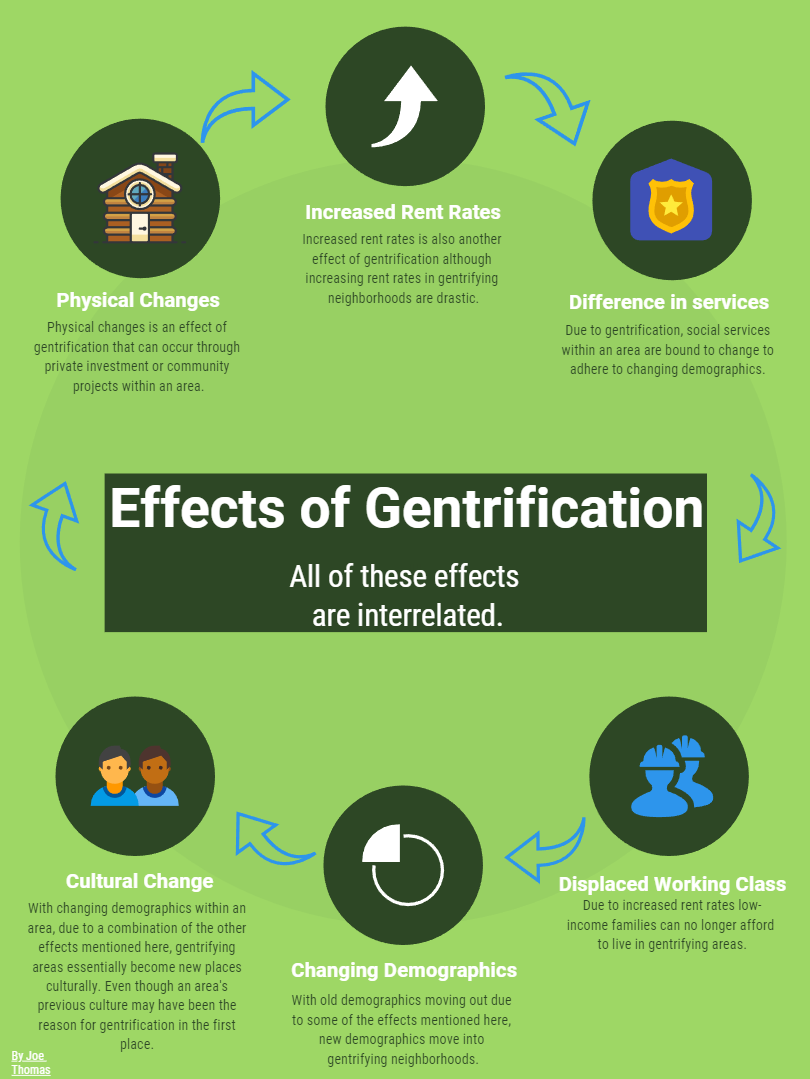
New Yorkers have, in general, mixed views about gentrification. Some see it as a positive way to change neighborhoods as it brings about new structures and services, while others see it as the end of calling their own neighborhood home. Many are aware of the physical effects of gentrification. However, other effects are hidden from view. They include increased rent rates, difference in services within a neighborhood, displaced working class, and overall changing demographics. Perhaps the most important impact of gentrification is that gentrification changes the culture of a neighborhood.
Physical changes or improvements to a neighborhood

One of the easiest changes to notice about a neighborhood that may show the effects of gentrification are the physical changes to a neighborhood. Of course, it is possible that physical changes can come about through community projects aimed to improve the community. However, it is clear when physical change is a distinct effect of gentrification to those who are long time residents within an area. For example, to the residents of the Thelma Burdick building in Manhattan’s Lower East side, something as simple as a new establishment being opened up in a neighborhood can mean removing an aspect of home for the people who lived there for generations upon generations.
The Thelma Burdick building is an affordable housing building, located on the lower east side of Manhattan, has lost ownership of their own backyard to the likes of an extravagant luxury hotel. Ian Schrager along with his partners bought the backyard land for $50 million in 2012. Schrager and his partners used the land to create a 28-story hotel that has luxury condos selling for around $20 million. Long time residents of the Burdick building had an issue with this because it took away from a large part of what made this building home for a lot of the families, which was a community plot of land that served as a play area for many children as well as home to a community garden for 30 years. Obviously, this changed due to gentrification. The plot of land went from a place the entire neighborhood could enjoy to a space where only the rich can access. A prime example of gentrification at work within NYC.
Increased Rent Rate
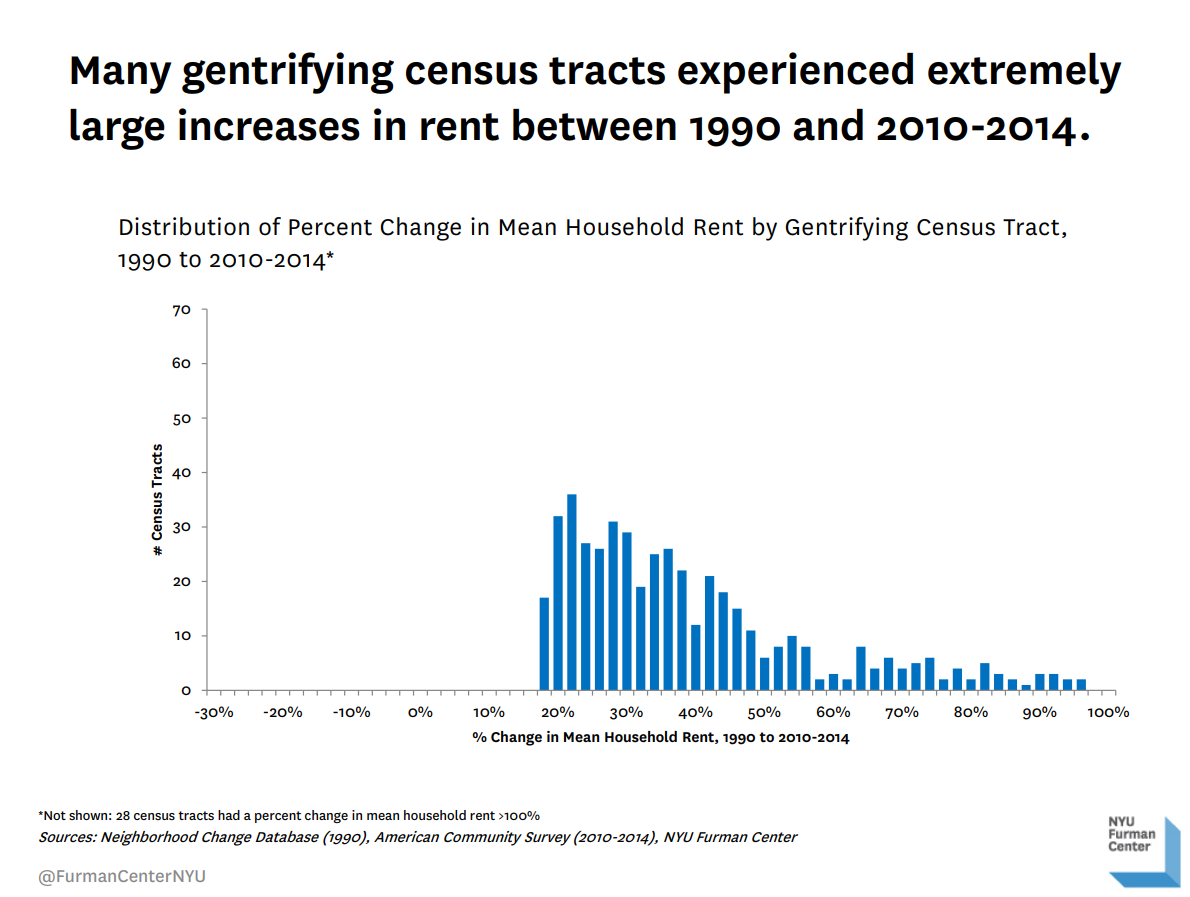
There are many things that most New Yorkers can all agree on, and one of them is the fact that the rent rates in NYC are drastically high compared to most other areas in New York State. Yet in the case of gentrifying neighborhoods, rent rates have seen drastic increases.
Taking the Bronx as an example in this, the Bronx has been seen as “one of the last affordable home ownership opportunities in NYC.” However despite this, the Bronx still experiences increased rent rates resulting in many of the previous residents who can no longer afford to live there to move out. Gentrification, in the context of NYC, normally occurs through a series of events in which properties are bought by investors and real estate agencies. With the intention of making profit, these investors and real estate agencies may renovate the property or build entirely new structures on the property and raise rent rates to compensate for doing so, while eventually turning a profit in the long run. As a result of this, families that are no longer able to keep up with the rent increases will eventually move out of these neighborhoods in seek of affordable housing. Affordable housing being one of the most important factors for residents living in areas throughout NYC; which is in danger under the effects of gentrification.
Differences in Services within an area
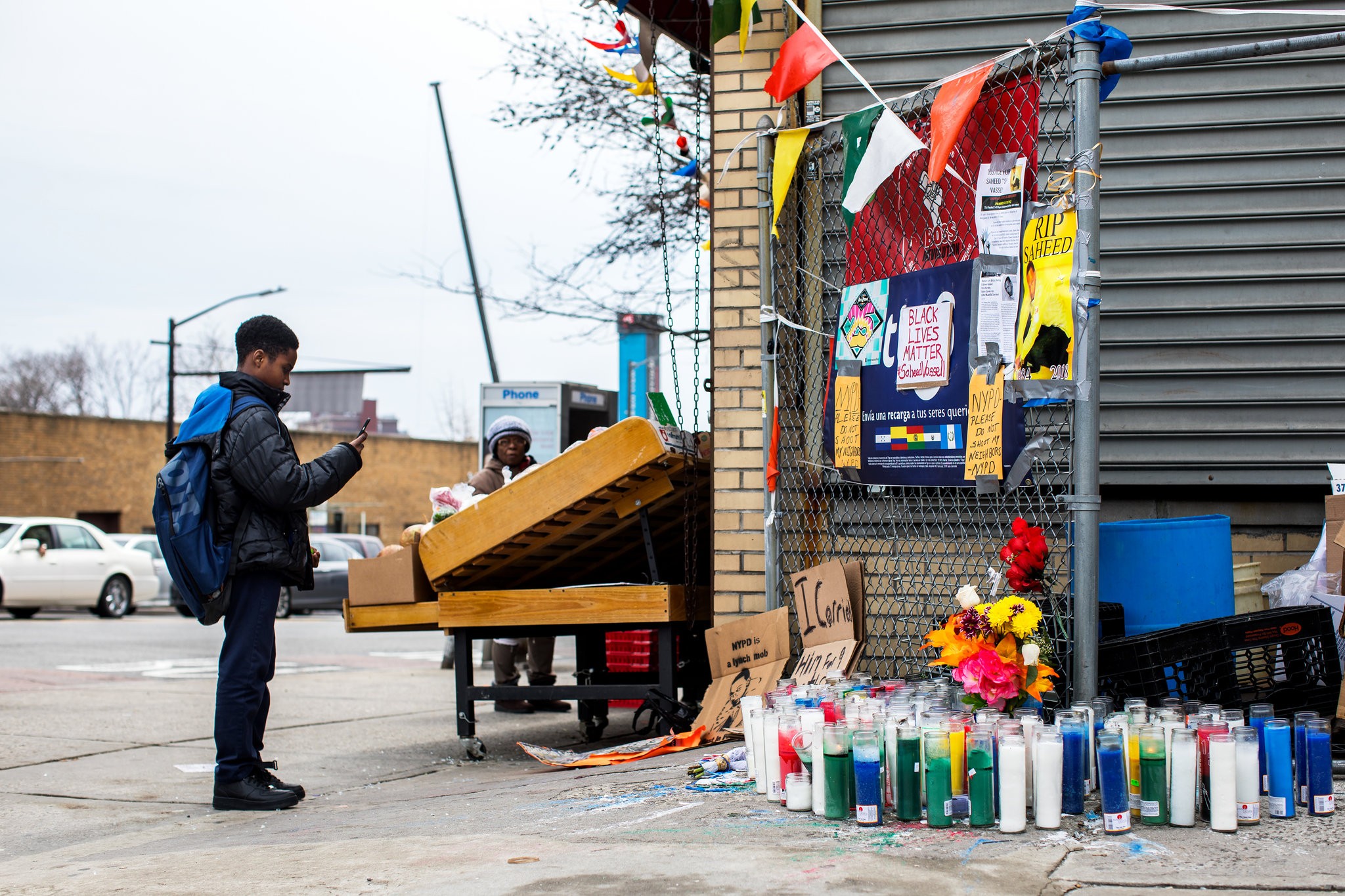
Along with physical changes and rent increases, differences in services within an area is also one of the effects of gentrification. Ginia Bellafante describes events that took place in Crown Heights in Brooklyn, NY. “Pairs of police officers were monitoring the block where, two days earlier, four of their colleagues had shot 10 bullets at a 34-year-old black man, Saheed Vassell, killing him.” An unfortunate event that, at first glance, doesn’t seem like it has anything to do with gentrification. However, these events are an example of how services being altered in gentrifying neighborhoods can negatively affect a neighborhood.
It was explained that this unfortunate event occurred due to responses to a “trio of 911 calls reporting that a man was wielding what looked like a silver gun and threatening people with it…” When in fact, the truth was “what appeared to be a firearm was, in fact, a metal pipe with a knob and the man who looked as if he might be a dangerous assailant turned out to be someone well known locally, a welder and a father who suffered from bipolar disorder, a frequent, harmless presence on the streets.” This is where the situation clearly points to gentrification, because as stated in the article, “a belief took hold in the community that the people who had alerted the police to Mr. Vassell’s erratic behavior were surely outsiders… The notion that the invaders, afraid of what they did not know, were surely responsible, exemplifying the growing terror around gentrification circulating in Central Brooklyn, which is experiencing one of the most acute housing crises in the country.”
As you can see, even the services within an area are no longer normalized when an area is experiencing gentrification. In fact, I would go so far as to say that as a neighborhood is being gentrified, it is no longer home for either the newest additions to the neighborhood or the long standing residents of the neighborhood. Before a neighborhood is gentrified, police or other social services may already be adjusted to the demographics within the neighborhood. Therefore, they may already know how to deal with the occurrences and issues of the neighborhood particular to them. However, this is often times thrown out of balance when an area begins to gentrify because gentrification brings about a new demographic that may be unaware of the occurrences within a neighborhood. These new demographics simply have not been in said area long enough to understand the normal yet potentially harmless occurences within the neighborhood. Due to the increasing difficulty of balancing what old and new residents are comfortable with or what they are used to in terms of the occurrences within the neighborhood, the end result will be changes in how services are used or provided in order to be used by all within the neighborhood. This can obviously be a great thing, but there are instances such as the unfortunate events that took place in Crown Heights, Brooklyn in which gentrification can bring about negative effects.
Displaced working class (or families in general)
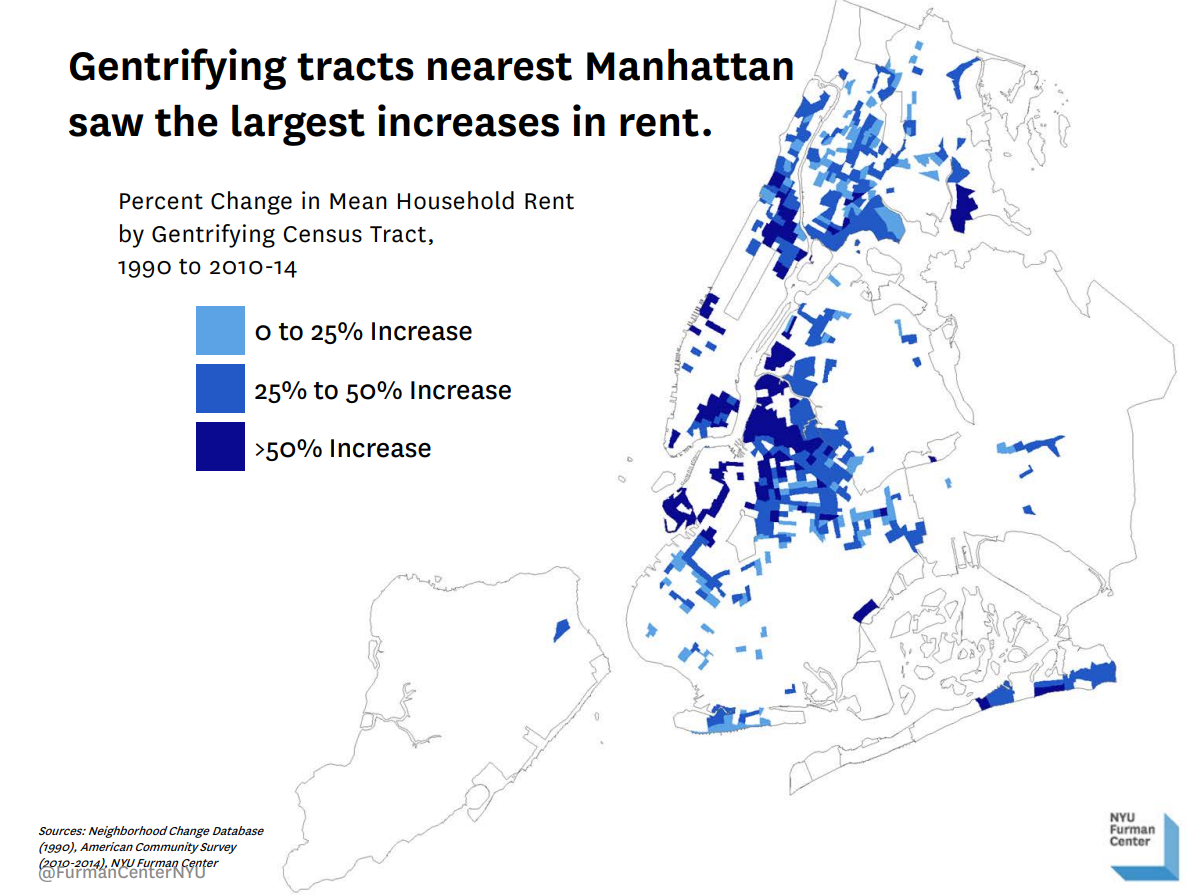
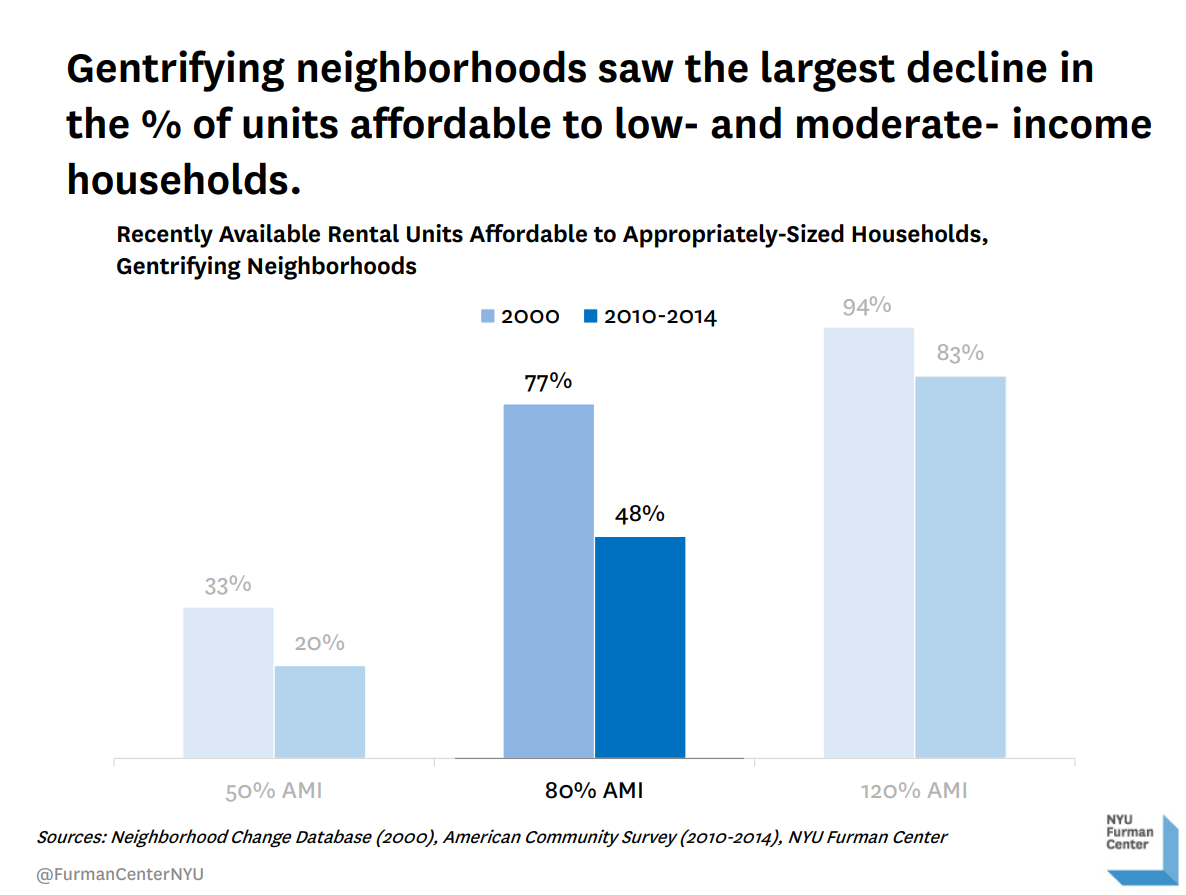
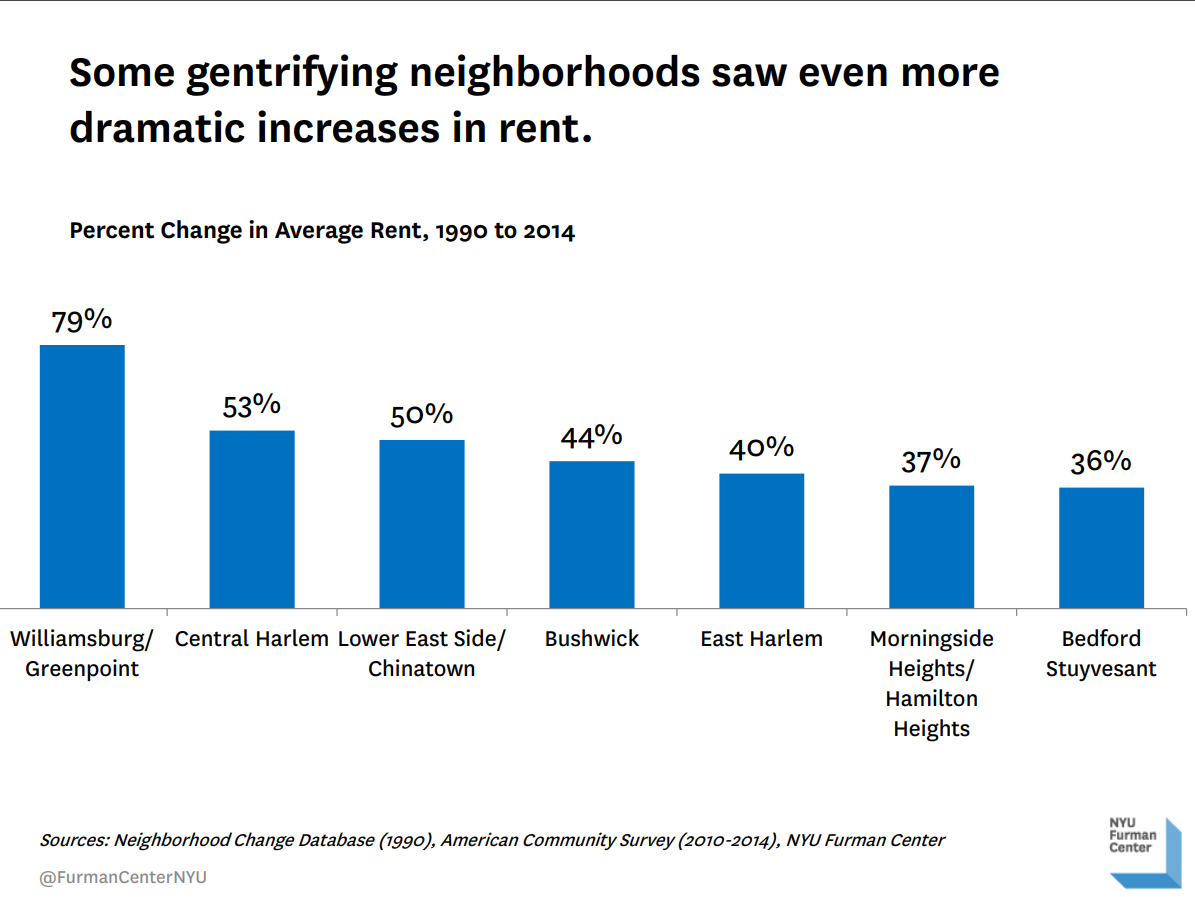
As stated earlier, high rent increases that are the result of gentrification often times leads to the displacement of working class families. This is an effect of gentrification that is multifaceted. It is multifaceted in the sense that it can occur under the guise of community policy and physical improvement while at times, coming off as intentional by those who are trying to take properties that were previously home to low-income citizens and change the intended market of these properties. Gentrification as a process normally dictates that an area is considered affordable for low-income families. Then it is bought or invested into by those with the resources capable of doing so, and the end result is increased rent rates. Most of the time this is the driving factor that pushes low-income families out of the area. Celia Weaver, a research director at the activist group New York Communities for Change says, “Affordable’ really means income-targeted, because the model is mixed-income developments where most of the building is unaffordable to the neighborhood and in fact above the market rate of that neighborhood, to create a planned new market.”
Of course this shows how gentrification may happen in the guise of community development, but I believe the bigger point to take away from this quote is the fact that families of different income levels are now competing for the same neighborhoods that were previously affordable for low-income families. More on the issue of displaced families due to rent increases can be shown in the graphs below sourced from NYU’s Furman center.
Changing Demographics within an area
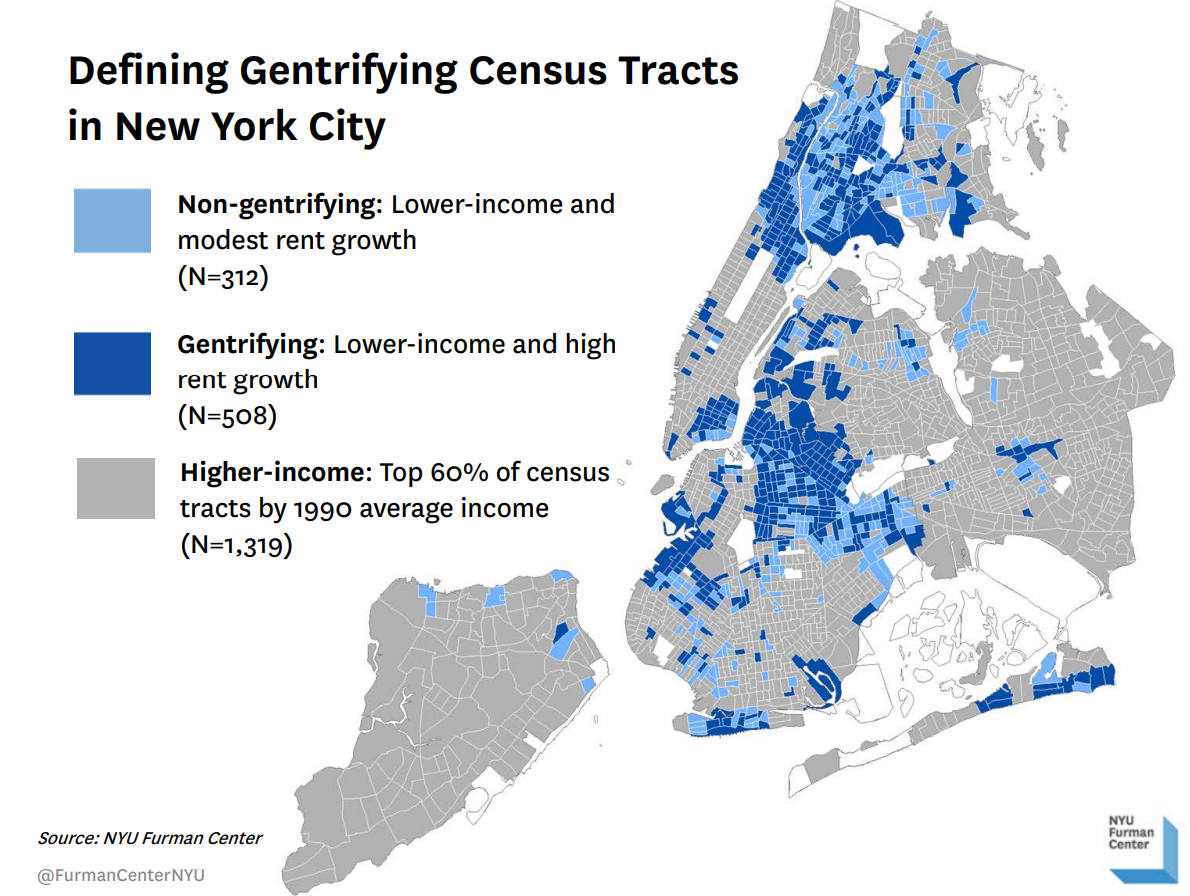
With many families moving out of gentrified areas due to not being able to afford the rent rates, neighborhoods begin to see changes in the people that inhabit them. Stephanie Rosoff’s “Indicators of Neighborhood Change: Measuring Gentrification in New York City” provides statistical evidence of what gentrification looks like in NYC.
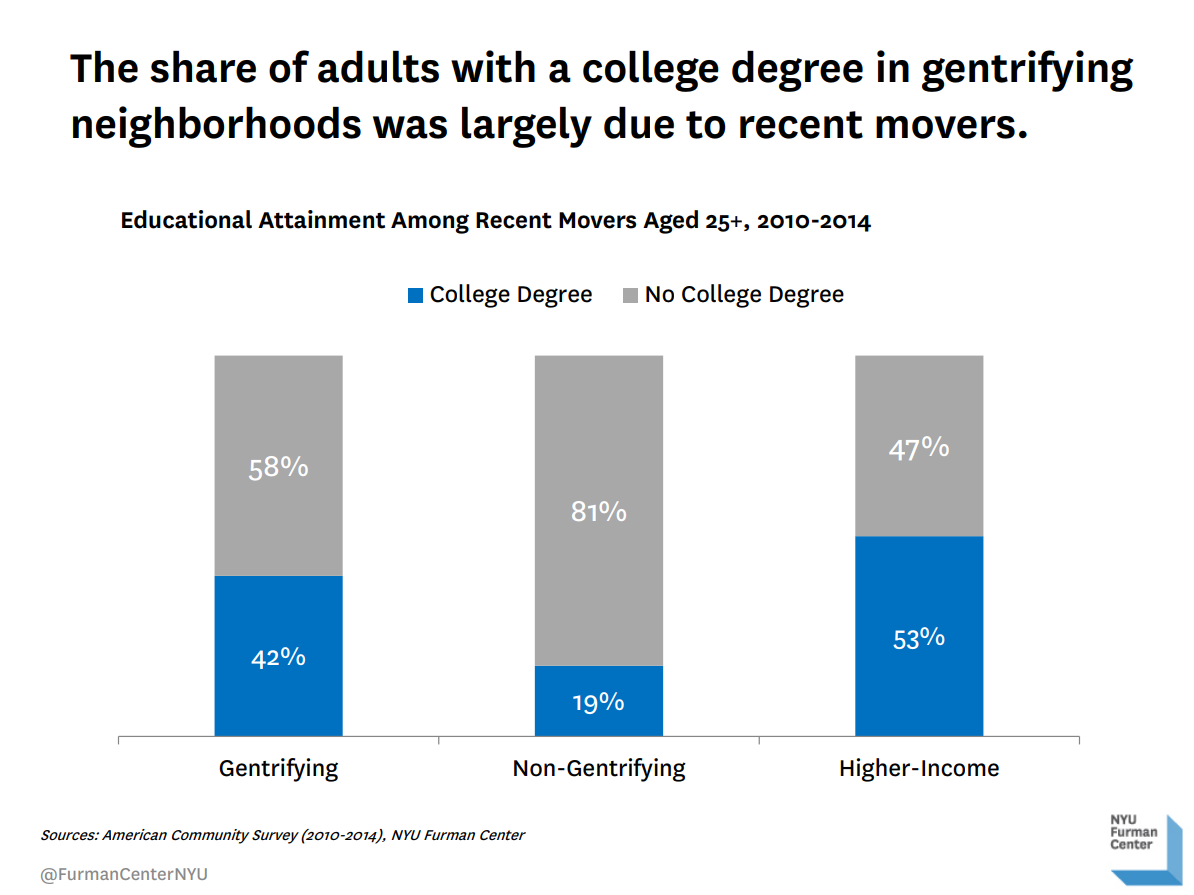
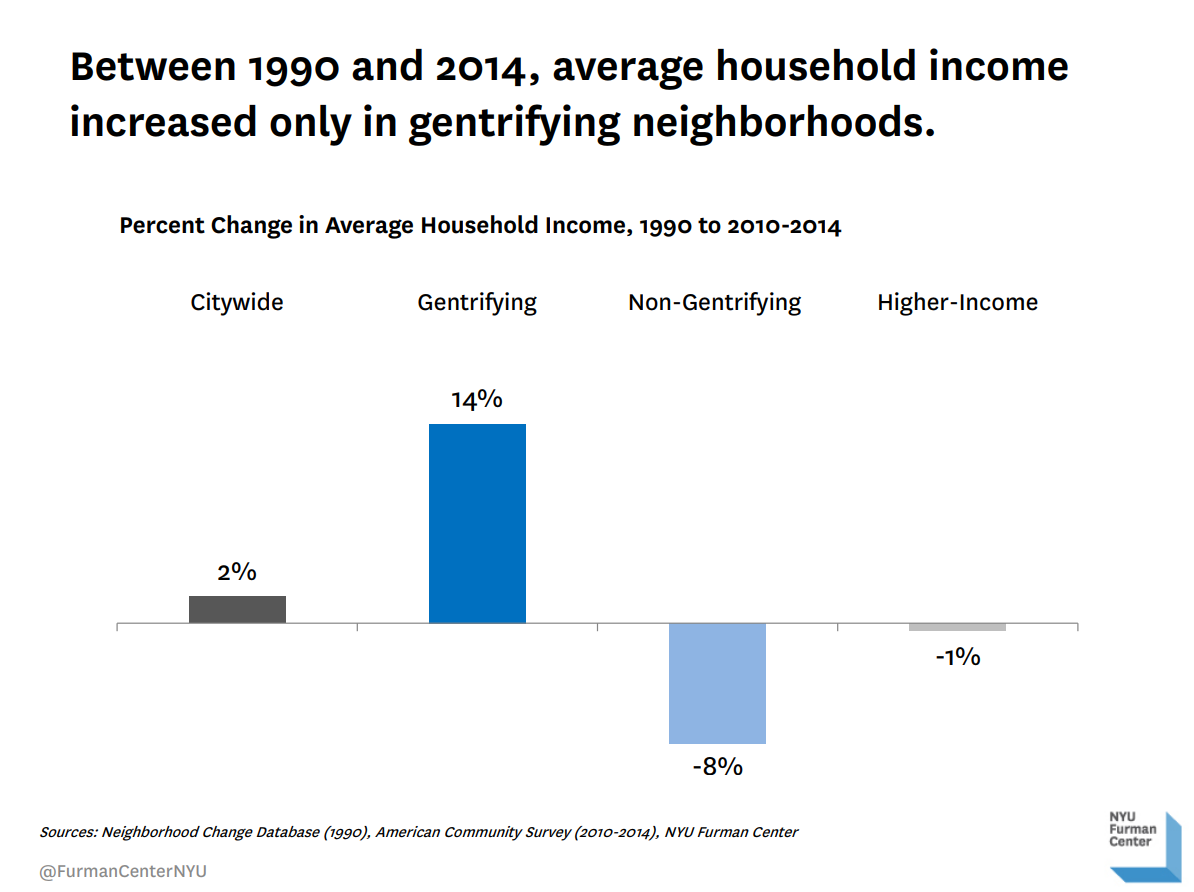
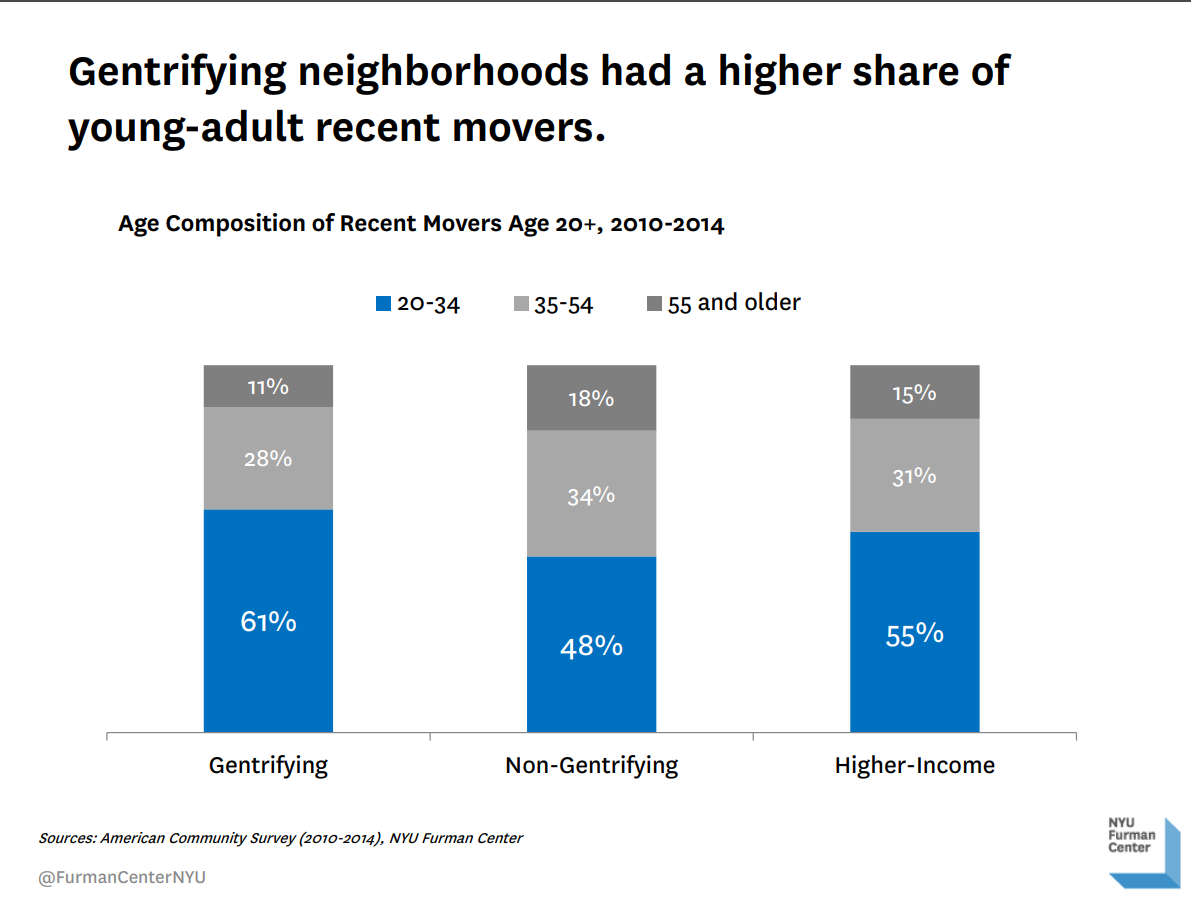
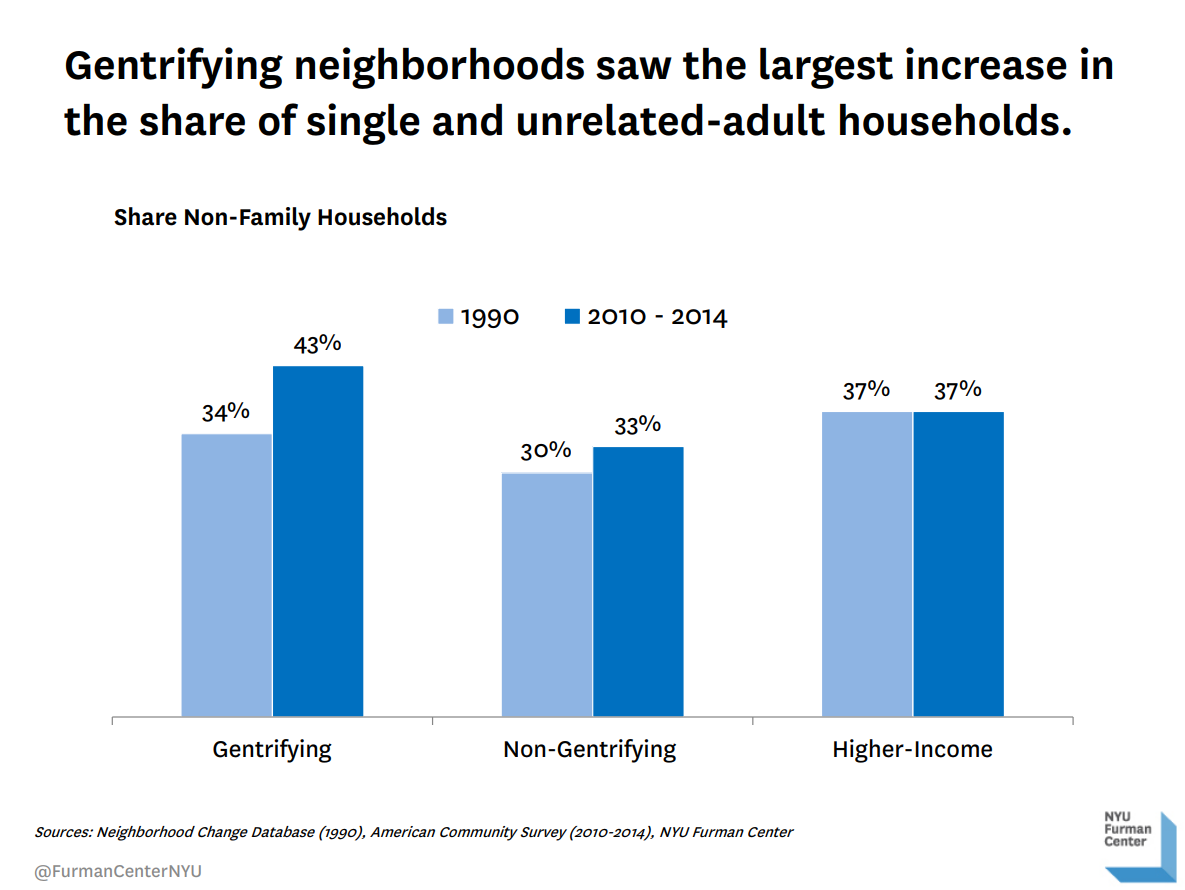
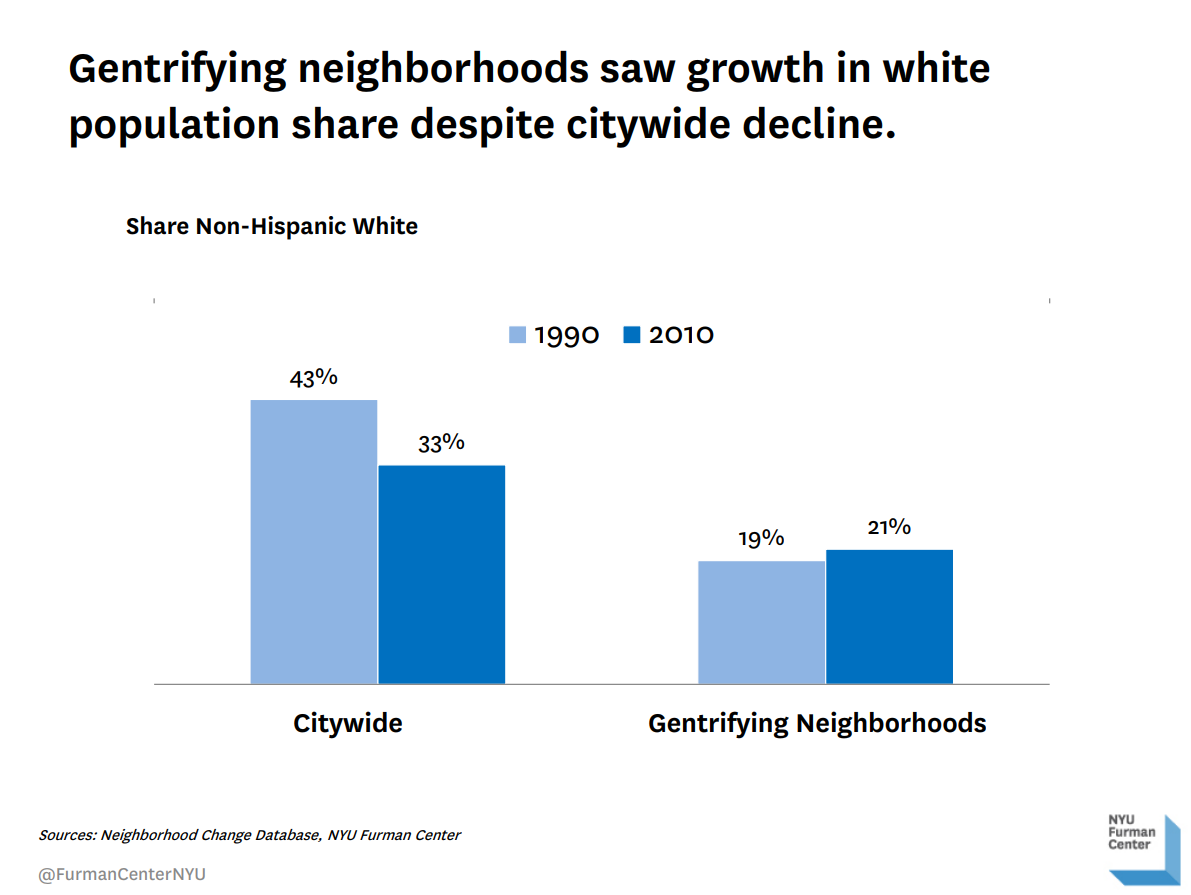
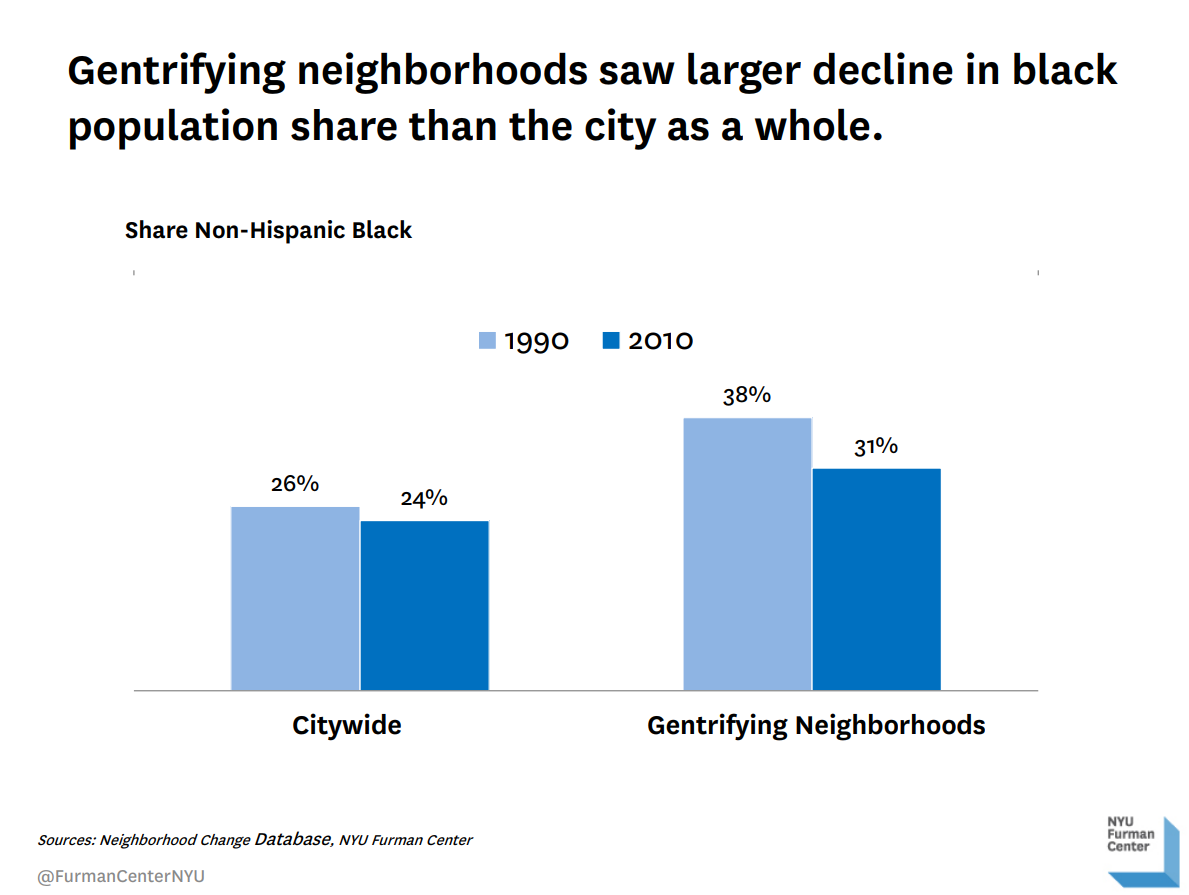
Overall, gentrifying neighborhoods can be seen to have an increase in residents who gross higher average household income, higher levels of education, and are generally comprised of a different age group than the residents who lived there pre-gentrification or even those who still reside in these areas. Also, according to the data, gentrifying neighborhoods seem to have an increase in single households as well as an increasing white population and a decreasing black population share compared to the entire city. Regardless of one’s opinions regarding the importance of these demographic changes these effects are very important to understanding how gentrification affects a community dynamically.
Cultural change within an area
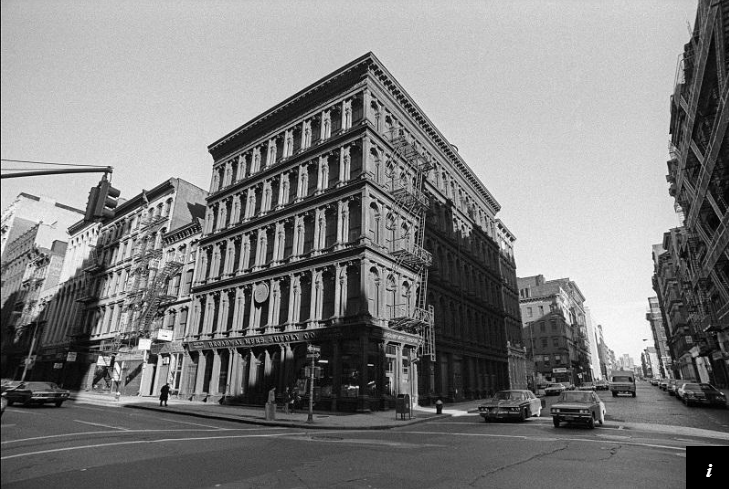
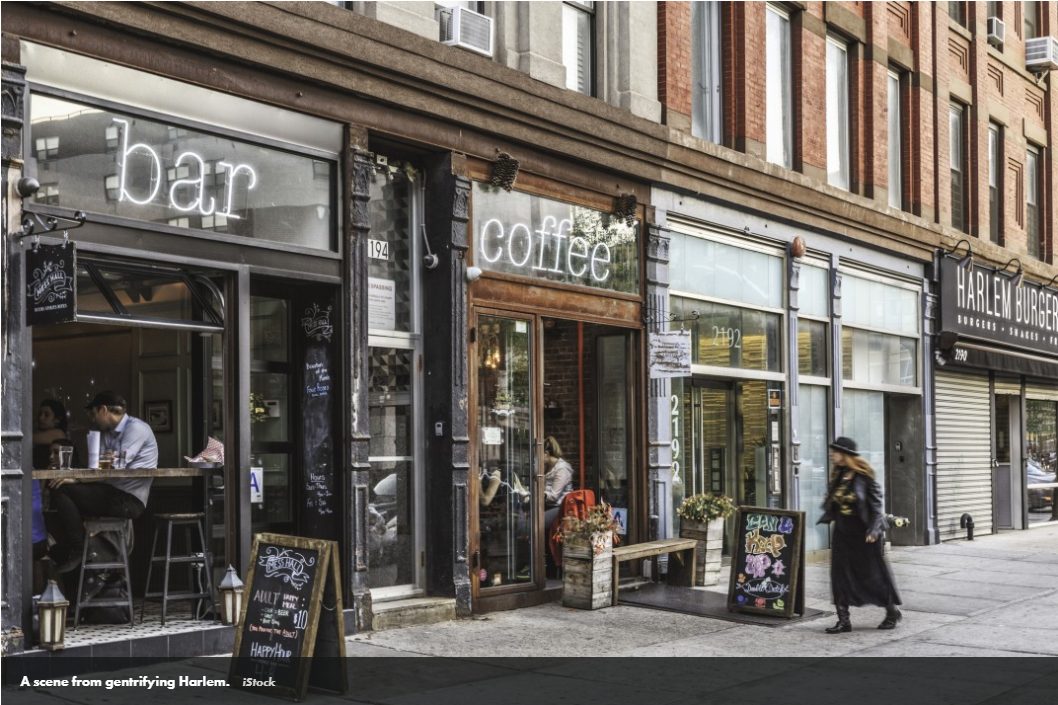
With all of the aforementioned effects of gentrification working dynamically with each other to produce the phenomenon of gentrification, the most fundamentally important effect is the change to the culture within an area. All of these changes in combination with each other essentially contributes to the main effect of gentrification being cultural change. Of course it makes sense that this is the main effect that is examined by those who are aware of gentrification. However, it may be difficult to understand the effects of gentrification without examining all of the effects in correlation to each other as we have done so here.
When areas are publicly denounced as having a specific culture that has been established over years of particular demographics living there and cultivating a culture around the area, gentrification seems to take that identity and change it artificially. I mean artificial in the sense that it was not changed by the same demographics that originally shaped the culture there, and it certainly did not happen naturally. Instead gentrification changes culture by literally displacing those that created the culture of these areas. One of the most famous examples of this is the SoHo area in Manhattan. An area that was originally home to the meat-packing industry, eventually became a hotspot for fashion outlets and creatives and then became an upscale living area for higher income families due to gentrification and the idea of selling an area’s culture. So while gentrification is often times initiated with the intention of highlighting an area’s culture to sell it off as a product for profit, it seems that the profit is more of a priority than preventing all of the negative effects that come with gentrification. This is why the cultural change that comes with gentrification is the most important effect to pay attention to because often times this cultural change in unnatural and is motivated by profit driven actions. It is unfortunate that profit is what drives gentrification to change areas from places that many low-income families can consider home to areas that have a false sense of identity for the sake of being trendy and profitable.
Keeping Up With The Hype
What’s All The Hype?
Yi Fang Chen
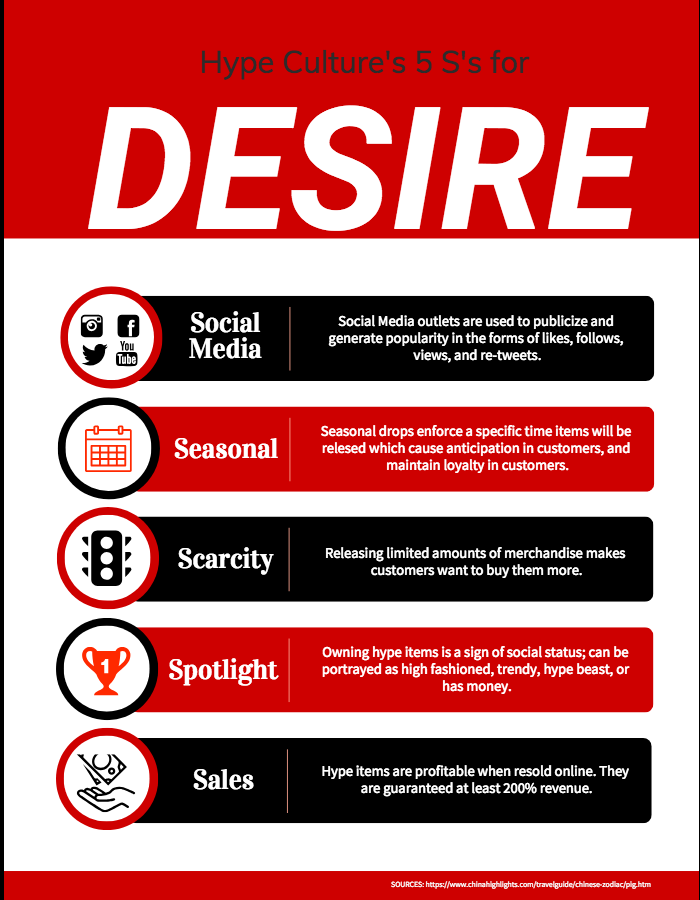
Over the past few years hype culture has grown immensely by breaking into the fashion and business industry. Powered by excitement and adrenaline, “hype culture” is a term used to describe an entire subculture built around streetwear brands and getting access to the rarest products available. Hype culture began with sneaker lines such as Jordans and Nike Air Maxes because they were the first to release merchandise through a seasonal drop process. When streetwear brands like Supreme, who put their logos on more than just clothing and saw increasing success, that traditional high end fashion brands began to participate in “drops” and collaborate with streetwear brands. Today high fashion brands like Alexander Wang, Gucci, and Burberry have hopped onto the “drop” bandwagon and have begun to use the tools of hype culture to rebrand and promote their companies. Scarcity, buying and selling, trade, and social media are key components to hype cultures success. They drive customer interest and increase sales. Younger millennials and generation Z’s obsession with hype opened up new possibilities for buyers and sellers to create a new lifestyle for individuals. How do brands like Yeezy, Off White and even Gucci maintain their “hype”? Why do individuals participate?
Hype Culture: The Community
What is hype culture?

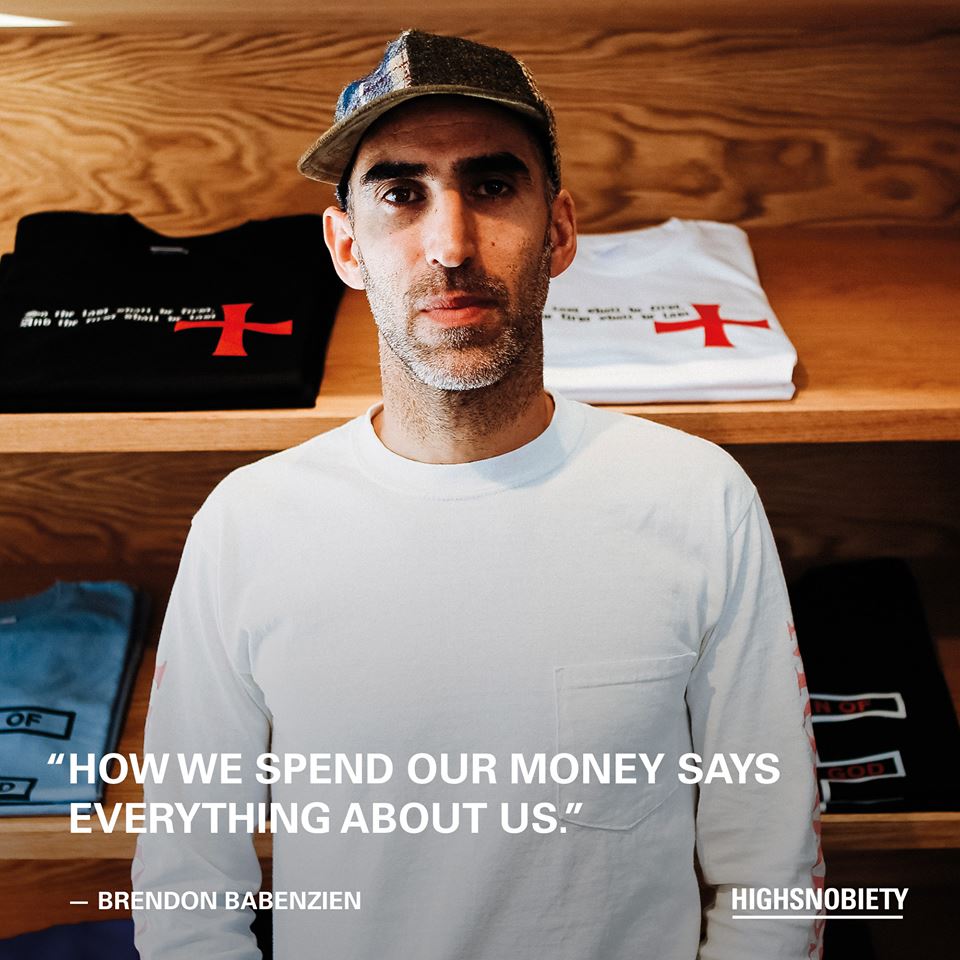
Hype is all relative and revolves around the ‘come up’ or next big thing. “Hypebeast” is a nickname given to generation Z/ younger millennials ages 16-35, who use hype as form of expression. They are excited by not only an items rarity, but also the credibility it comes with when flaunted on social media, along with its potential resale value. When you own a scarce, fashionable product, you align yourself with an esteemed social group, ultimately boosting your social image.
There are two types of hypebeasts
There are two types of hypebeasts; buyers and sellers. Buyers go to online sellers, stores, and conventions with the intention to spend money. They are either trying to expand their collection or are looking for something specific. Sellers turn to websites, stores, and conventions to make money. They know how much their items are worth and go in prepared to make the most from their collection. At events like Complex Con, there are designated ‘flipping’ area where consumers can go directly online to resell their loot.
The Big Drop
The concept of drops is a retail tactic designed to increase brand’s revenue through e-commerce. Brands utilize the generations obsession with limited edition items to traffic popularity and loyal consumers. Depending on the brand, drops can happen in store but mostly they are done online. Once a drop is released it can sell out in seconds due to the anticipation built from social media communities.
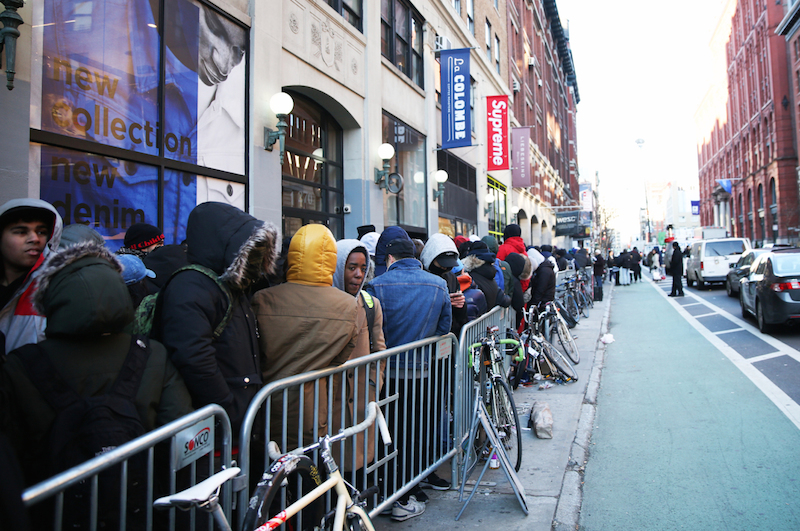
says Supreme Partner Samuel Spritzer. As more and more companies release items through drops, they are making more money online than in store. Drop culture has lead to an incline of in-store sales. After more retailers embraced drop culture, their store sales increased from the declining of stores and in-store sales over the past 2-3 years.
Scarcity
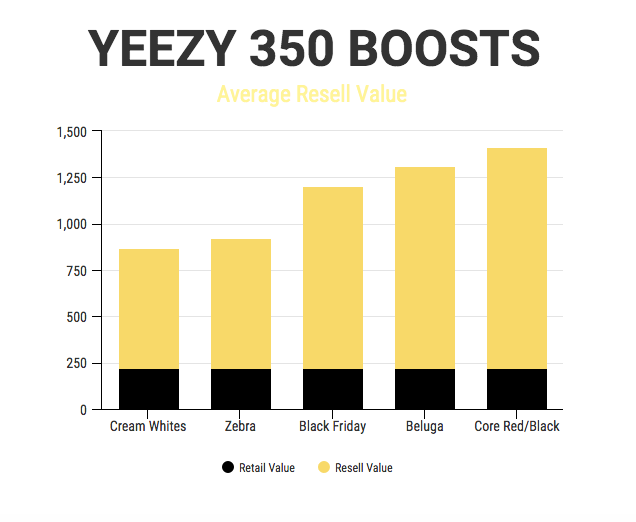
NYU Stern School of Business professor Adam Alter explains. Yeezy and Off White rely heavily on scarcity to maintain their popularity. Within the past few years the resale value of items from these brands increased from 200% to at least 500%. Unlike traditional retailers, these brands release a limited amount of merchandise seasonally and never release the same thing twice. Once the items are sold out individuals will have to turn to third party sellers to obtain the item, which makes items from these brands collectables. The scarcity of merchandise drives people’s demand for product which enables brands to maintain their hype through third party sellers. Releasing a limited amount of merchandise introduces the “rare” component to buying and selling.
Buyers and Sellers
Hype has created not only a culture but also provided individuals with a platform for new business opportunities. Purchasing hype can be ones career choice rather than their hobby or personal interest.
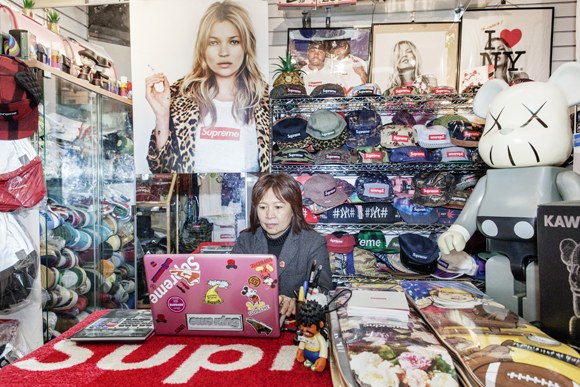
There have been many individuals who have made fortunes from buying and selling, not just the owner of retail websites. Aside from scarcity, there has to be a reason why individuals buy into these brands, and for that reason(s) brands like Yeezy, Off White and even Gucci are able to maintain their hype. Buying and Selling sounds extremely literal, but those who have made a business of buying and selling can prove there is a strategic method of playing the game that can make the most profit. Due to the limited supply of these items, online sellers markup the price for these items, in all increasing the difficulty to obtain hype items and the value of its brand. In an interview with BBC, Binghamton University student Kyle Maiorano shares he made a revenue of $200,000 by reselling Adidas Yeezy Boosts. Kyle starts off,
explaining where the demand for hype comes from. Hype is an investment that has potential to turn into a career, however sellers can lose money if they don’t keep up with the market. Similar to corporate retail buyers, hype sellers need to have knowledge of the product and how much items can resell for before purchasing items for profit.
The Come Up






There are multiple ways individuals can experience buying and selling. One way is subscribing to brand emails for notices on when drop dates will be. On drop days individuals will go to their emails and open the invitation to access the drop, which will lead them to a waiting room. While they are in the waiting room they can see what items are being sold, how much they are, and depending on the brand, how much there is left of each item. After some time, it will be their turn and they will be able to purchase items. When the items arrive individuals will have the option to either keep, resell, or trade their items. If they chose to resell their items, typically they would turn to safe and popular resell websites like StockX which helps buyers check if items are legitimate, and sellers make the transaction for business. The buying and selling process is an indication of how hype can be a platform for individuals to create a form of income. Those who purchase hype items for retail price are investing their money into an item, and when the item is sold out they can resell it for at least double the price they paid.

“The clothes just didn’t match the message and the sampling that the young people were bringing about. They needed something that was consistent with the attitude and their approach towards reality. And that wasn’t there for them. The Symbol of success is in the logo. You would wear fine garments, but kids would need to know that these garments cost money. The more of the logo you have, the more expensive the garment seems, and it looks like you have arrived.”
– Dapper Dan, Legendary Harlem couturier
Trunzo, Brian, et al. “The New Luxury .” The New Luxury, Sept. 2018, highsnobiety.com.
Events like Complex Con and Hypefeast are annual hypebeast conventions where individuals can buy, sell, trade, and socialize. Complex Con(short for Complex Conversations) is a festival style, two-day spectacle divided into three main sections; panels and conversation, musical performances, and market. Hip hop artists like Migos, Future, and Rae Sremmurd to name a few, have all made appearances to perform or talk about the latest trends in hype. Inspired by early skate and hip hop culture, what was originally an underground scene has become mainstream. Major sneaker brands like Nike and Adidas along with popular streetwear brands like Supreme, Off White, and A Bathing Ape (BAPE) all have their own booths where people can buy or admire. High end brands like Louise Vuitton, Gucci, and Versace also have a place at these conventions.Their collaborations with streetwear brands mesh the styles of street with high end to create a subculture where individuals can further express themselves.
What is Fast Fashion and Why do People Consider it so Dangerous?
Priya Vikram
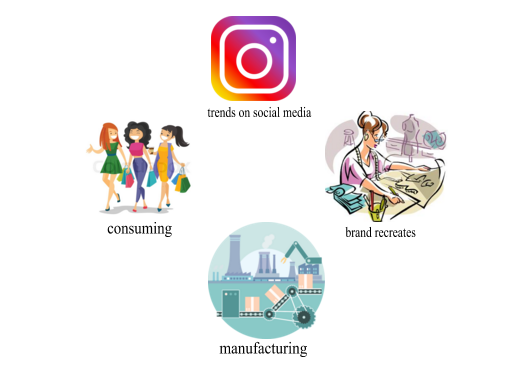
The fashion industry today is criticized by original designers, labor activists, and environmentalists greatly due to the impact it has on our world. With this industry, an issue arises within departments of producing, manufacturing, selling, and consuming all resulting in what we call “fast-fashion”. One reason this problem is rising is that trends on social media are becoming more prevalent and brands feel the need to copy them and add the pieces to their line. A cycle is formed between social media and these sectors of the crisis resulting in a billion dollar industry. We all should care and take a stance due to the damage it causes to humans and everything that surrounds us.
How does “fast-fashion” work?
Fast-fashion, a social media, and economic driven industry recreates a high-end piece that is trendy at that moment increasing the level of disposability/waste to a consumer due to low quality. The purpose of going through this process is to keep costs as low as possible, which also results in the reason that contributors produce globally versus in America. In America, we must pay our workers a certain amount and have maximum working time resulting in minimized production.
Simply said, fast-fashion is the action of manufacturing trendy clothes quickly overseas, where once consumed, usually disposed of shortly after. Aside from social media, it has become widespread over time as the use of clothes have increased significantly and companies must rapidly manufacture their product in mass in order to keep the consumer happy.
Why is social media so important?
In any market, when trends are set, more businesses enter. According to GQ, this happens in the fashion industry, but with an interesting approach – every season, high-end brands release new pieces, but manufacture locally, resulting in high costs. When certain clothing becomes popular through the power of social media, other brands try to recreate the same look at a cheaper price and at a rapid pace.
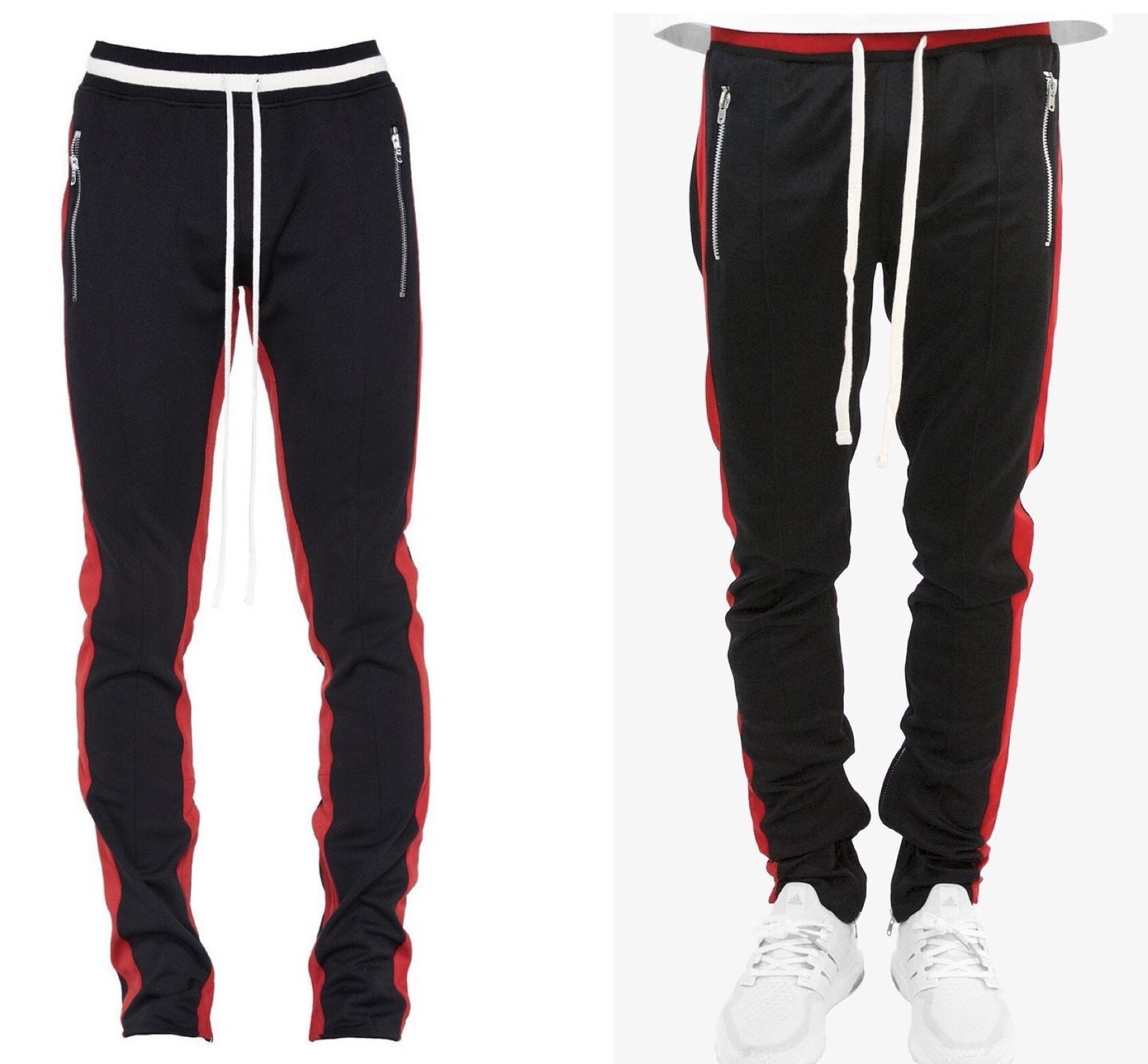
MNML, the label that spoke to GQ about their participation in this process says they feel like they value the customer more when they do it. However, the brand Fear of God that is being copied feels like it’s damaging to their brand since MNML could create a replica of their design, but get it out faster with their manufacturing process. Here’s where the problem of fast-fashion comes in – everything described above throughout the majority of big name brands that your average consumer shops from.
Why do experts say “fast fashion” has a negative impact on labor
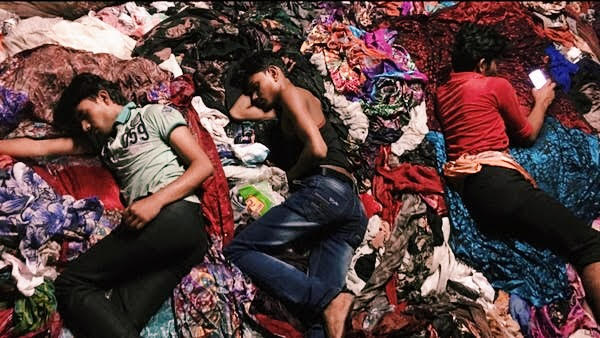
Global factory workers almost work double the amount as the average American shift, reaching a maximum of 16 hours. The documentary MACHINES displays the rough conditions resulting in exhausted, sleep deprived workers who are surrounded by toxic chemicals and dust daily all at the cost of being underpaid.
It might seem obvious to produce in America instead, but companies prioritize revenue and convenience over ethics. However, manufacturing in America comes with many upsides in turn. It creates jobs, ensures quality due to proximity and ability to fix mistakes quickly, and also involved local product so fastest and cheapest delivery. This transitions into our impact on the environment: manufacturing in the US helps reduces our carbon emissions by not using oversea transport.
Why do experts say “fast fashion” endangers the environment?
According to the Trusted Clothes, the average American wastes approximately 70 pounds of clothes per year, which results in millions of tons of waste ending up in landfills.
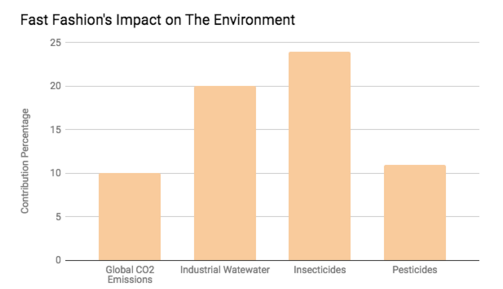
Aside from what may be considered the obvious, landfills aren’t the only aspect affected. It’s quite shocking to find out that clothes alone contribute to 10% of global CO2 emissions, 20% of the world’s industrial wastewater, 24% of insecticides and 11% of pesticides.
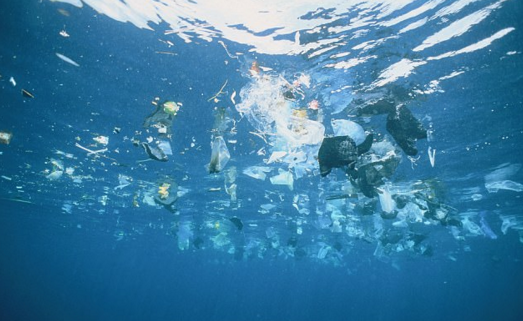
Plastic is a common material to think of when talking about waste, but we tend to think of water bottles when in reality it’s also used in clothing. These microfibres end up in oceans and due to size, they can be consumed by a small creature such as plankton and passed up the food chain to humans. It also makes it even harder to clean out since they’re tiny and dispersed.
Can anything be done?
Yes. Something can be done if we make a collective effort to take preventive measures against fast-fashion. Solutions are simple when we look at everything that causes the problem since all the causes are avoidable.
From a manufacturing perspective: many brands such as H&M are a product of fast-fashion for one reason being what was told above, but another being unsold inventory. If places order the amount they need to sell-out, there won’t be a mass excess of clothing.
What can individuals do?
We can also control our clothing habits and contribute to the change in simple ways. According to Arden Rose, a fashion blogger, recycling
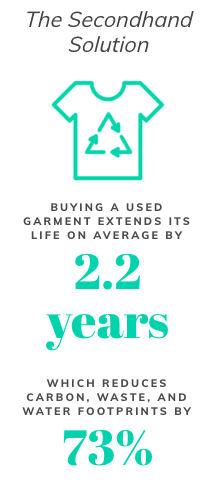
may seem like an easy way to get rid of old clothes, but a good percentage of those donations will end up in landfills too. She says the best way is to try and stop obsessing over trends and if there is a need to buy new clothes, it’s important to buy them ethically sourced. Realize that buying way more clothes at a cheaper value isn’t that beneficial considering it will be thrown out quickly versus a quality piece of clothing that will last forever.
Another way that has become popular as social media has risen is reselling. This can ensure that someone else will get another cycle of wearing the piece rather than risking the donation and the store deciding they don’t want to sell it.
Lastly, we must repurpose – there are ways to repair clothing if it has ripped, or using the material for a completely different project. Levi’s has created a section on their website on ways you can use old jeans to create something new: from insulation to home decor!
Works Cited
Grant, Nick. “Inside the Anything-Goes World of Instagram Fast- Fashion.” GQ.com, GQ, 26
Oct. 2017, http://www.gq.com/story/fast-fashion-streetwear-brands-of- instagram.
Kell, Georg. “Can Fashion Be Sustainable?” Forbes, Forbes Magazine, 4 June 2018,www.forbes.com/sites/georgkell/2018/06/04/can-fashion-be- sustainable/#643f073441
Mezzadri, Alessandra. “Watch This Documentary to Understand the Working Poverty of the Sweatshop.” The Conversation, The Conversation, 9 Oct. 2018, theconversation.com/watch-this- documentary-to-understand-the-working-poverty-of-the-sweatshop- 76356.
Paoli, Luca De. “Stella McCartney Slams Fast Fashion as a Threat to the Environment.”Bloomberg.com, Bloomberg, 8 Nov. 2018, www.bloomberg.com/news/articles/2018-12-12/stella-mccartney-calls- sees-fast-fashion-As-environmental-threat.
Paton, Elizabeth. “H&M, a Fashion Giant, Has a Problem: $4.3 Billion in Unsold Clothes.” The New York Times, 27 Mar. 2018, www.nytimes.com/2018/03/27/business/hm-clothes-stock-sales.html.
Perry, Patsy. “The Environmental Costs of Fast Fashion.” The Independent, Independent Digital News and Media, 8 Jan. 2018, www.independent.co.uk/life- style/fashion/environment-costs-fast- fashion-pollution-waste- sustainability-a8139386.html.
Reinhart, James. “2018 Fashion Resale Market and Trend Report.” ThredUP, http://www.thredup.com/resale.
Rose, Arden. “How to NOT Destroy the Planet While Shopping.” Youtube, 31 July 2018.
Worth, Jill. “7 Benefits of Manufacturing in the United States.” The Rodon Group, 26 July 2018,www.rodongroup.com/blog/7-benefits-of- manufacturing-in-the-us.
Wright, Michelle. “15 Ways to Reuse, Repurpose and Reimagine Your Jeans.” Levi Strauss, 11
Sept. 2014, http://www.levistrauss.com/unzipped-blog/2014/09/10/15-ways-to- reuse- repurpose-and-reimagine-your-jeans/.
“Fast Fashion in Landfills.” Trusted Clothes, 14 June 2017, www.trustedclothes.com/blog/2016/09/05/fast-fashion-landfills/.
“Number of Social Media Users Worldwide 2010-2021.” Statista, Statista,www.statista.com/statistics/278414/number-of-worldwide- social-network-users/.
 robertdanberg